How to Design a Sleep-Friendly Bedroom: The Complete Guide
Transform your bedroom into a sleep-optimized sanctuary with science-backed strategies for darkness, temperature, comfort, and psychological safety.
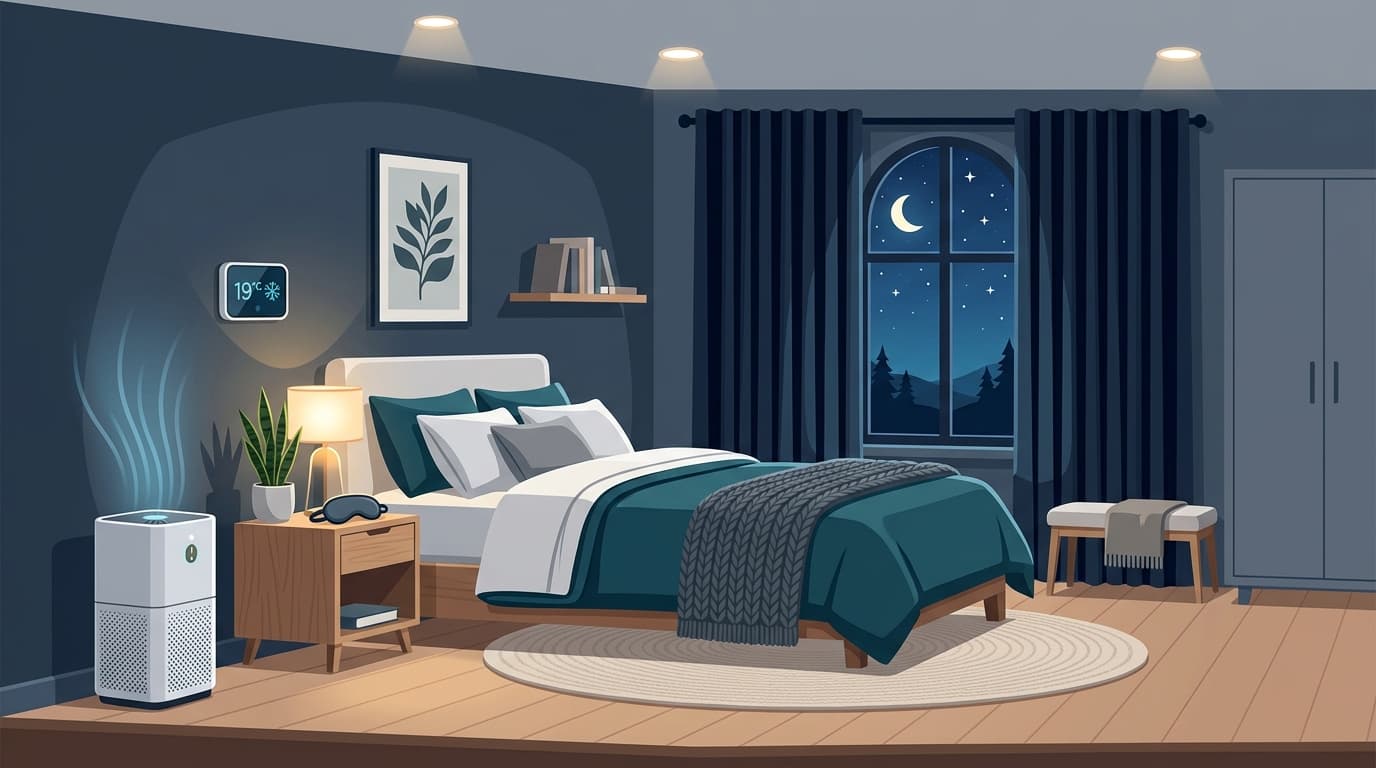
Your bedroom is not just where you sleep. It's where your brain learns how to sleep.
Most people focus on supplements, routines, or meditation—but ignore the physical environment where they spend one-third of their life. Your brain constantly scans your surroundings for cues of safety, light, temperature, and stimulation. If your bedroom sends the wrong signals, your nervous system stays alert—even when you're exhausted.
A sleep-friendly bedroom is not about luxury. It's about removing friction between your body and sleep.
This guide explains the science behind sleep environments and gives clear, practical steps to transform your bedroom into a place where sleep happens faster, deeper, and more reliably.
Why Your Bedroom Environment Matters
Sleep is controlled by two major biological systems:
Circadian rhythm — controlled by light, darkness, and environmental cues
Sleep pressure — controlled by fatigue and brain chemistry
Your bedroom influences both.
If your room is:
- Too bright → melatonin stays suppressed
- Too warm → your core temperature cannot drop
- Too noisy → your brain stays in threat-monitoring mode
- Too stimulating → your brain associates the space with wakefulness
Your brain learns patterns quickly. If your bedroom becomes associated with stress, screens, or work, falling asleep becomes harder—even if you're physically tired.
Your goal is simple:
Teach your brain: this room equals sleep.
Principle 1: Darkness Is the Strongest Sleep Signal
Light is the most powerful regulator of sleep hormones.
Even small amounts of artificial light can reduce melatonin production and delay sleep onset.
Common hidden light sources include:
- Phone screens
- Charging indicators
- Streetlights through curtains
- LED clocks
- Laptop lights
Your brain interprets light as daytime—even if it's midnight.
How to Optimize Darkness
Use blackout curtains
These block external light completely. Especially important if you live in cities or work night shifts.
Eliminate LED lights
Cover small LEDs with tape if needed.
Turn off overhead lighting 60–90 minutes before bed
Use dim lamps instead.
Avoid phone use in bed
Even brief exposure delays melatonin release.
Optional upgrade: sleep mask for complete darkness.
Complete darkness accelerates sleep onset and improves REM sleep quality.
Principle 2: Temperature Controls Sleep Onset
Your body must cool down to fall asleep.
Core temperature drops naturally at night. If your room is too warm, your body struggles to enter sleep.
The ideal bedroom temperature is:
16–19°C (60–67°F)
This range supports natural thermoregulation.
Why Cooler Rooms Improve Sleep
Cool environments:
- Help the brain enter deep sleep faster
- Reduce nighttime awakenings
- Improve REM sleep duration
- Improve morning alertness
Warm environments increase restlessness and lighter sleep.
How to Optimize Temperature
- Lower thermostat at night
- Use breathable cotton bedding
- Avoid heavy synthetic blankets
- Take a warm shower before bed (this causes cooling afterward)
- Use fans or airflow
Warm yourself. Cool the room.
That contrast helps sleep.
Principle 3: Your Bed Must Be Reserved for Sleep
Your brain forms associations quickly.
If you regularly:
- Work in bed
- Watch videos in bed
- Eat in bed
- Scroll social media in bed
Your brain stops linking the bed with sleep.
Instead, it links it with stimulation.
This creates conditioned insomnia.
The Rule
Use your bed only for:
- Sleep
- Relaxation
- Intimate connection
Avoid everything else.
If you cannot fall asleep after 20 minutes, get up briefly and return when sleepy.
This retrains your brain.
Principle 4: Mattress and Pillow Support Matter More Than You Think
Discomfort causes micro-awakenings you don't remember—but they destroy sleep quality.
Signs your mattress is hurting your sleep:
- Wake up with stiffness
- Toss and turn frequently
- Wake up tired despite enough hours
- Mattress older than 7–10 years
Mattress Guidelines
- Medium-firm works best for most people.
- Memory foam reduces pressure points.
- Hybrid mattresses provide airflow.
- Personal comfort matters more than brand.
Pillow Guidelines
Your pillow should keep your neck neutral.
- Side sleepers need thicker pillows.
- Back sleepers need medium height.
- Stomach sleeping is not recommended.
Correct spinal alignment reduces tension and improves deep sleep.
Principle 5: Reduce Noise and Unexpected Interruptions
Your brain never fully turns off. It constantly monitors sound for danger.
Even if you don't wake fully, noise fragments sleep.
Common sleep-disrupting sounds:
- Traffic
- Doors closing
- People talking
- Electronics
- Pets
Solutions
- White noise machines mask interruptions.
- Fans provide consistent sound.
- Earplugs work effectively.
Consistent sound is better than unpredictable silence.
Your brain relaxes when it detects stable patterns.
Principle 6: Remove Psychological Stress from the Room
Stress activates cortisol.
Cortisol blocks sleep.
If your bedroom reminds you of:
- Work
- Deadlines
- Responsibilities
- Stressful tasks
Your nervous system stays alert.
Remove Work-Related Items
Avoid:
- Work desks inside bedroom
- Laptops visible from bed
- Paperwork
- Notifications
Create mental separation.
Your brain must associate the room with recovery—not performance.
Principle 7: Declutter the Space
Clutter increases cognitive stimulation.
Even if you're not consciously thinking about it, your brain processes visual information constantly.
Minimal environments help your nervous system relax faster.
Keep Bedroom Simple
- Bed
- Lamp
- Nightstand
- Essential furniture
Remove unnecessary items.
Clean environments support mental calm.
Principle 8: Optimize Air Quality and Oxygen Flow
Poor air quality disrupts sleep.
Fresh air improves oxygen availability and breathing quality.
Benefits include:
- Fewer awakenings
- Better brain recovery
- Reduced headaches
- Improved morning energy
Simple Improvements
- Open windows when possible.
- Use fans for circulation.
- Avoid stuffy, sealed rooms.
Plants can help psychologically, though airflow matters more.
Principle 9: Control Smell and Sensory Signals
Smell directly affects the limbic system—the emotional brain.
Certain scents promote relaxation.
Common calming scents:
- Lavender
- Chamomile
- Sandalwood
Avoid strong artificial smells.
Subtle signals work best.
Principle 10: Light Exposure Strategy Inside the Bedroom
Morning light helps you wake.
Night darkness helps you sleep.
Your bedroom should support both.
Morning
Allow sunlight inside.
This resets circadian rhythm.
Improves nighttime sleep.
Night
Block light completely.
This protects melatonin.
Principle 11: Electronic Devices Are the Biggest Modern Sleep Destroyer
Phones, TVs, and laptops stimulate the brain.
They produce:
- Blue light
- Dopamine stimulation
- Cognitive engagement
This delays sleep onset.
Even passive watching reduces sleep depth.
Bedroom Technology Rules
- Avoid TVs in bedroom.
- Charge phone away from bed.
- Avoid scrolling after lights out.
- Use alarm clocks instead of phones if possible.
Your brain needs psychological separation from stimulation.
Principle 12: Create a Consistent Nighttime Atmosphere
Consistency trains the nervous system.
Small repeated cues signal sleep readiness.
Examples:
- Same lighting each night
- Same temperature
- Same scent
- Same wind-down routine
Your brain begins preparing automatically.
Sleep becomes easier over time.
Principle 13: Position and Layout Matter
Your bed should feel psychologically safe.
Avoid placing bed directly facing door if it causes alertness.
Avoid sleeping under harsh overhead lighting.
Place bed where you feel calm.
Psychological comfort affects nervous system safety signals.
Principle 14: The Ideal Sleep-Optimized Bedroom Checklist
Darkness
- Blackout curtains
- No LED lights
- Minimal artificial light
Temperature
- Cool room
- Breathable bedding
- Air circulation
Comfort
- Supportive mattress
- Proper pillow
- Soft bedding
Noise
- White noise or silence
- Reduced interruptions
Mental association
- No work items
- No screens
- Bed used only for sleep
Environment
- Clean
- Minimal
- Calm
How a Proper Bedroom Improves Your Life Beyond Sleep
Better bedroom design improves:
- Energy levels
- Mood stability
- Focus
- Hormone balance
- Immune function
- Stress resilience
Sleep is the foundation of recovery.
Your bedroom is the foundation of sleep.
Common Mistakes Most People Make
- Sleeping in warm rooms
- Using phones in bed
- Working from bed
- Using bright lighting at night
- Keeping TVs in bedroom
- Ignoring mattress quality
These small mistakes accumulate over time.
Fixing them often improves sleep dramatically—even without supplements.
You Don't Need Perfection—Just Improvement
Even fixing one factor can improve sleep.
Start with:
- Darkness
- Temperature
- Removing screens
Then improve gradually.
Sleep environments compound benefits over time.
Final Thoughts: Your Bedroom Is a Biological Tool
Your bedroom is not decoration.
It's infrastructure.
Your brain responds to environmental signals automatically. When your bedroom consistently signals darkness, safety, and calm, sleep becomes effortless rather than forced.
People often search for complex solutions while ignoring the simplest one:
Fix the place where sleep happens.
Design the environment correctly—and your biology will follow.