The 10-3-2-1-0 Sleep Rule Explained
A simple countdown system that removes sleep disruptors in stages, preparing your brain for deep, uninterrupted sleep through structured evening habits.
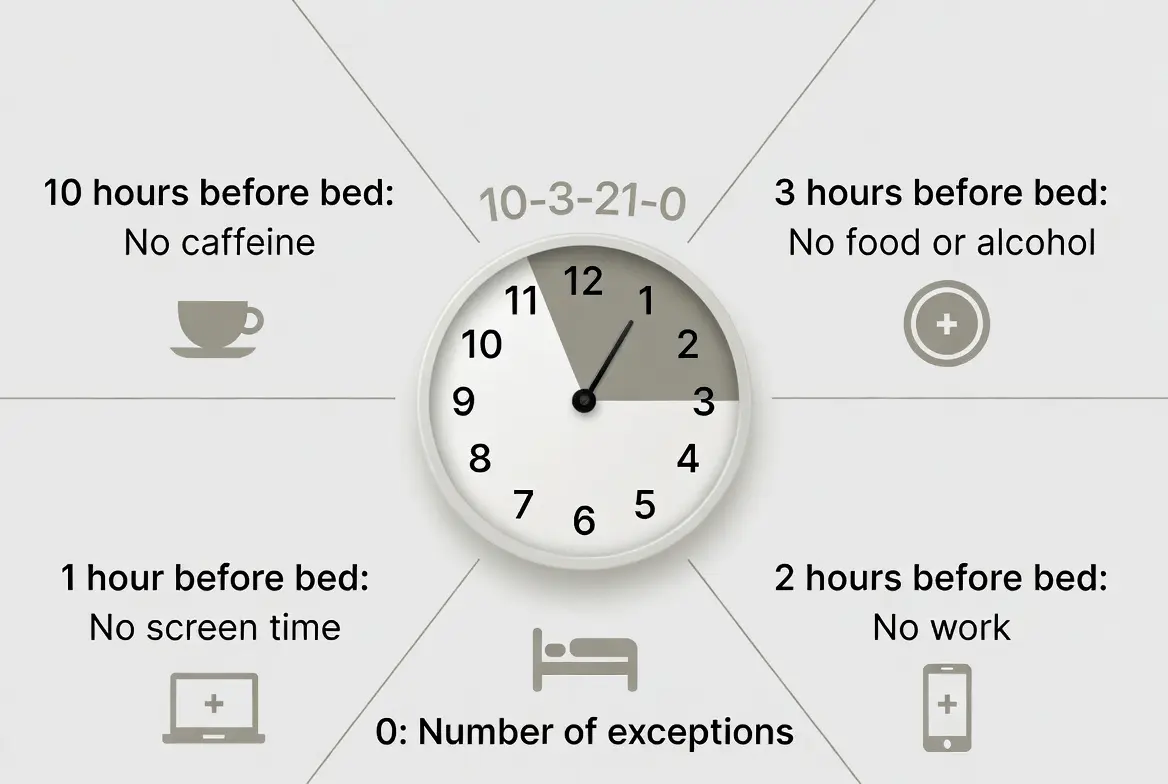
Most people struggle with sleep not because they lack time, but because their brain never fully transitions into sleep mode. Modern evenings are filled with caffeine, work stress, screens, and mental stimulation. By the time you lie down, your body is exhausted—but your nervous system is still active.
The 10-3-2-1-0 Sleep Rule is a structured countdown that removes sleep disruptors in stages. Each number represents a specific habit to stop before bed, allowing your brain to gradually shift into recovery mode.
It is simple, practical, and highly effective for working professionals and anyone with demanding schedules.
What the 10-3-2-1-0 Rule Means
Each number represents hours before bed:
10 hours before bed: No more caffeine 3 hours before bed: No more heavy food or alcohol 2 hours before bed: No more work 1 hour before bed: No more screens 0 times in the morning: No hitting snooze
Each step supports your circadian rhythm and nervous system.
Together, they create the conditions your brain needs for deep sleep.
10 Hours Before Bed: Stop Caffeine
Caffeine blocks adenosine, the chemical responsible for sleep pressure.
Adenosine builds throughout the day, creating the feeling of tiredness at night. Caffeine temporarily blocks this signal, making you feel alert even when your brain needs rest.
Caffeine can remain active in your body for 6–10 hours.
If you sleep at 11 PM, your last caffeine intake should be around 1 PM.
Sources include:
- Coffee
- Tea
- Energy drinks
- Pre-workout supplements
- Some sodas
Even small amounts can delay sleep onset.
Removing caffeine early allows natural sleep pressure to build.
3 Hours Before Bed: Stop Eating and Alcohol
Eating late keeps your digestive system active.
Your body cannot fully focus on sleep while digestion is working.
Late meals can cause:
- Restlessness
- Acid reflux
- Increased body temperature
- Reduced deep sleep
Alcohol may make you feel sleepy initially, but it disrupts sleep cycles later in the night.
Sleep becomes fragmented and less restorative.
Finishing meals at least 3 hours before bed allows your body to shift fully into recovery mode.
2 Hours Before Bed: Stop Working and Mental Stress
Work activates alertness chemicals like cortisol and adrenaline.
Emails, deadlines, and problem-solving signal your brain to remain alert.
Even if you stop working physically, your mind may continue processing tasks.
This delays sleep onset.
Use the last 2 hours for calming activities such as:
- Light reading
- Stretching
- Journaling
- Conversation
- Relaxation routines
Your brain needs time to disengage from performance mode.
1 Hour Before Bed: Stop Screens and Bright Light
Screens emit blue light, which suppresses melatonin.
Melatonin is the hormone that signals sleep.
Even short exposure can delay its release.
Screens also stimulate the brain mentally.
Social media, videos, and messages increase alertness.
Replace screen time with low-stimulation activities:
- Reading physical books
- Listening to calm audio
- Meditation
- Quiet routines
Reducing light allows your brain to recognize nighttime.
Sleep becomes easier and faster.
0 Times in the Morning: Stop Hitting Snooze
Snoozing fragments your final sleep phase.
Each time you snooze, your brain begins a new sleep cycle but cannot complete it.
This creates grogginess known as sleep inertia.
Waking at your first alarm helps stabilize your circadian rhythm.
It strengthens your sleep-wake consistency.
Over time, waking becomes easier.
Why This Rule Works So Well
Sleep is not controlled by a single action. It is controlled by signals throughout the day.
The 10-3-2-1-0 rule removes the most common sleep disruptors in sequence.
It supports:
- Natural melatonin production
- Healthy circadian rhythm
- Nervous system relaxation
- Proper sleep pressure buildup
Your brain receives clear signals that sleep is approaching.
This improves both sleep onset and sleep quality.
Example Schedule for a Working Professional
If your bedtime is 11 PM, your schedule would look like:
- 1 PM: Last caffeine
- 8 PM: Finish dinner
- 9 PM: Stop work and stressful tasks
- 10 PM: Turn off screens
- 7 AM: Wake without snoozing
This creates a structured transition into sleep.
Benefits People Notice After Following the Rule
Many people experience:
- Falling asleep faster
- Fewer nighttime awakenings
- Better morning energy
- Improved focus
- Reduced reliance on stimulants
Consistency strengthens these effects.
Your brain learns when to expect sleep.
How to Implement It Gradually
You do not need to change everything immediately.
Start with one step.
For example:
Stop caffeine earlier.
Then add screen reduction.
Small improvements compound over time.
Your nervous system adapts quickly.
Common Obstacles and How to Handle Them
Late work schedules
Create a shorter wind-down routine, even 30 minutes helps.
Screen dependence
Use night mode and reduce brightness first, then gradually reduce use.
Evening caffeine habit
Replace with herbal tea or non-caffeinated drinks.
Progress matters more than perfection.
Why Consistency Matters More Than Perfection
Your circadian rhythm thrives on predictability.
Following the rule most days is enough.
Your brain begins preparing for sleep automatically.
Sleep becomes less of a struggle.
Final Thoughts
The 10-3-2-1-0 Sleep Rule works because it respects how your brain naturally prepares for rest. Instead of forcing sleep at the last moment, it removes the obstacles that delay it. By managing caffeine, food, work, light, and wake timing, you allow your nervous system to transition smoothly into recovery mode.
Sleep improves not from a single action, but from the habits that lead up to it. This simple countdown provides a reliable framework your brain can trust—night after night.