Temperature Regulation & Sleep Onset
Learn how body temperature controls sleep initiation, why cooling signals matter, and practical ways to optimize your sleep environment for faster, deeper rest.
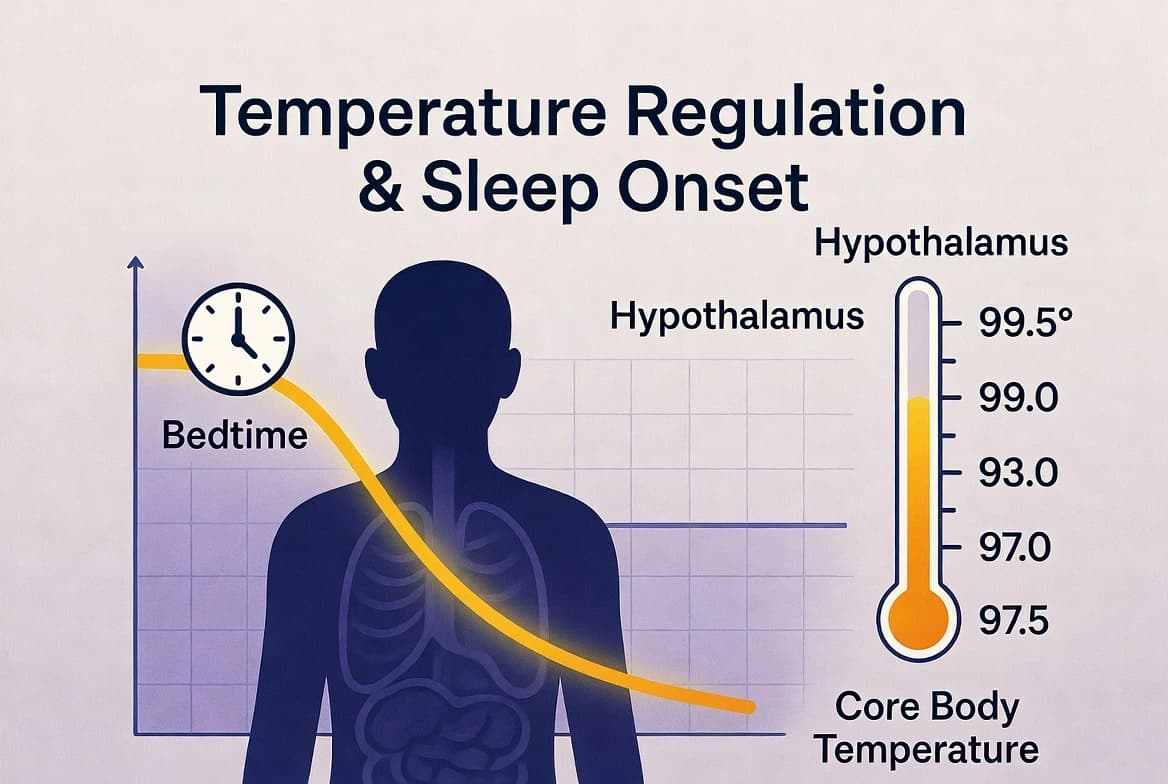
Falling asleep is not just about feeling tired. It is a biological process triggered by precise changes inside your body. One of the most important—and most overlooked—signals is body temperature regulation.
Your brain does not simply switch sleep "on." Instead, it waits for your core body temperature to drop, which signals that it is safe and appropriate to enter a restorative state.
If this cooling process is delayed or disrupted, sleep onset becomes slower, lighter, and less restorative.
Understanding temperature regulation helps explain why some nights you fall asleep easily, while other nights you lie awake despite feeling exhausted.
The Biological Cooling Signal
Your body operates on a circadian rhythm, a 24-hour internal clock that controls hormones, alertness, and temperature.
In the evening, your brain begins preparing for sleep by gradually lowering your core temperature by about 0.5–1°C (1–2°F).
This cooling process:
- slows metabolism
- reduces alertness
- relaxes muscles
- prepares the brain for deep sleep
This temperature drop is not accidental—it is required for sleep initiation.
If your body remains too warm, your brain interprets that as a signal to remain awake.
How the Body Releases Heat Before Sleep
To cool down efficiently, your body increases blood flow to your hands, feet, and face. These areas release heat into the environment.
This is why your hands and feet often feel warmer before bed.
This heat transfer allows your core temperature to decrease.
Once cooling reaches the necessary level, the brain initiates sleep stages.
Why Modern Environments Interfere With This Process
Many modern habits unintentionally prevent proper cooling.
Overheated Bedrooms
Warm rooms make it harder for the body to release heat.
Your cooling system cannot function effectively if the surrounding environment is too warm.
This leads to:
- delayed sleep onset
- lighter sleep
- frequent awakenings
Cool environments support faster sleep onset.
Screens and Artificial Light
Electronic devices stimulate brain activity and delay melatonin release. This indirectly delays the temperature drop required for sleep.
Mental stimulation keeps the nervous system in an alert state.
Your body remains in "day mode."
Late-Night Exercise
Exercise raises core temperature significantly.
While exercise improves sleep overall, performing intense workouts too close to bedtime can delay cooling.
The body needs time to return to baseline.
Stress and Nervous System Activation
Stress activates the sympathetic nervous system.
This increases heart rate, metabolic activity, and body temperature.
A calm nervous system allows cooling to occur naturally.
Why Cooling Helps You Stay Asleep
Temperature regulation is not only important for falling asleep—it also affects sleep maintenance.
If your environment becomes too warm during the night, your brain may partially awaken to correct the imbalance.
This reduces deep sleep duration.
You may not fully wake up, but sleep quality declines.
This leads to morning fatigue.
Why Hot Showers Can Help You Fall Asleep Faster
This may seem counterintuitive, but warm showers before bed can actually improve sleep onset.
Heat exposure increases blood flow to the skin.
When you exit the shower, heat rapidly dissipates.
This accelerates core cooling.
This mimics the body's natural cooling signal.
Warm showers taken 60–90 minutes before bed are especially effective.
Ideal Bedroom Temperature for Sleep
Research suggests the optimal sleep environment is between:
16–19°C (60–67°F)
This range supports natural heat loss.
Cool environments promote deeper sleep and fewer awakenings.
Temperatures outside this range can disrupt sleep efficiency.
Clothing and Bedding Matter More Than People Realize
Heavy blankets and non-breathable fabrics trap heat.
This prevents effective cooling.
Breathable materials allow temperature balance.
The goal is not to feel cold—but to allow the body to regulate naturally.
Signs Temperature May Be Disrupting Your Sleep
You may be experiencing temperature-related sleep disruption if you notice:
- difficulty falling asleep
- waking up overheated
- night sweating
- restless sleep
- fatigue despite adequate sleep duration
These signs often indicate poor thermal regulation.
Simple Ways to Support Natural Sleep Cooling
Lower your room temperature before bedtime
Take a warm shower 60–90 minutes before sleep
Use breathable bedding materials
Avoid heavy meals immediately before bed
Reduce stimulating activities late at night
These habits help your body enter sleep more efficiently.
Temperature Is One of Sleep's Most Powerful Triggers
Sleep is not controlled by willpower alone. It is controlled by biology.
Cooling is one of the strongest signals your brain uses to initiate sleep.
When temperature regulation functions properly, sleep becomes faster, deeper, and more restorative.
Supporting this natural process is one of the simplest and most effective ways to improve sleep quality.