5-HTP and Serotonin: The Sleep & Mood Connection
Explore how 5-HTP supports serotonin production to improve sleep quality, emotional balance, and break the cycle between poor sleep and low mood.
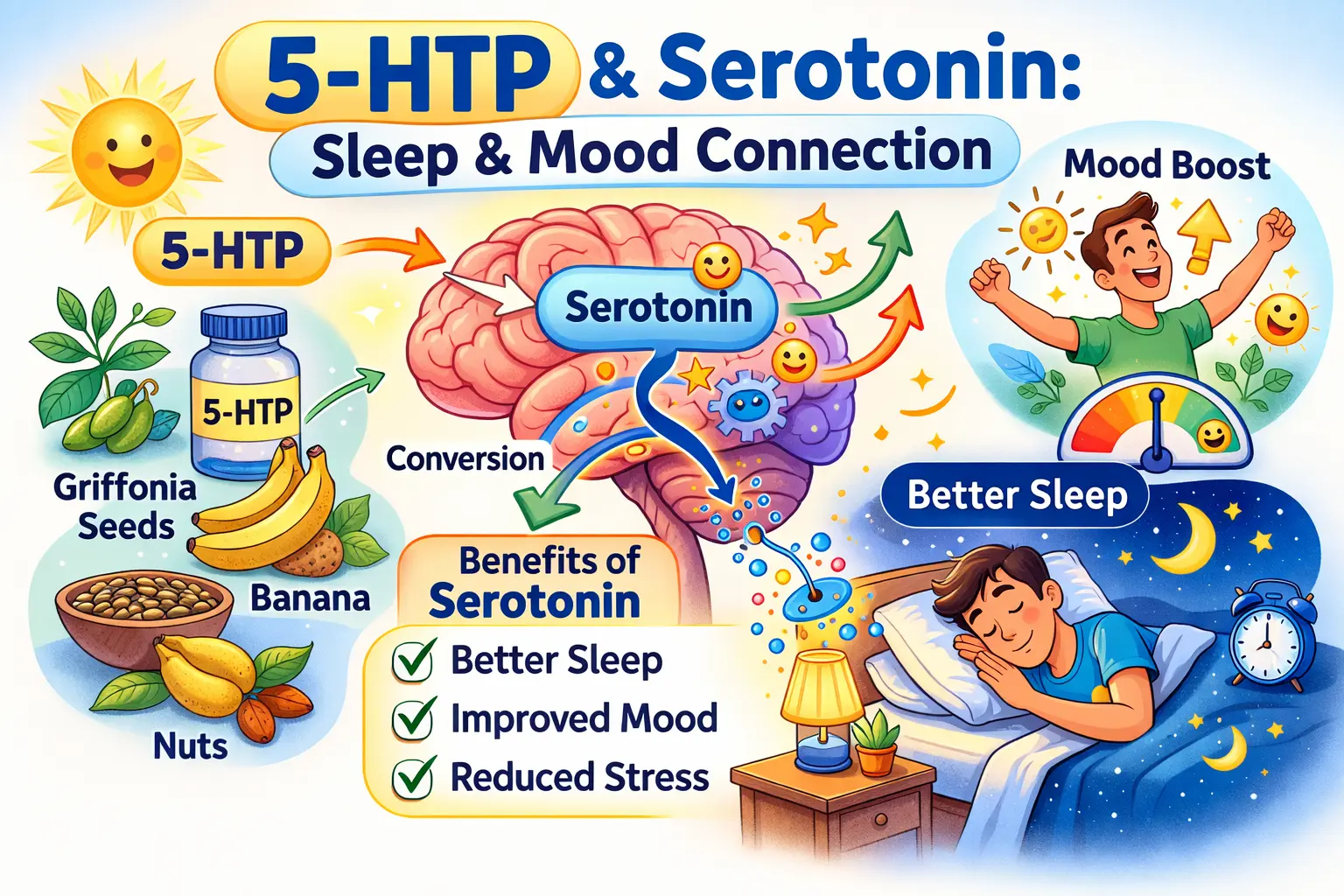
Sleep and mood are deeply connected. A single night of poor sleep can leave you irritable, unfocused, and emotionally sensitive. On the other hand, chronic stress, anxiety, or low mood can make it difficult to fall asleep or stay asleep. Behind this powerful connection lies brain chemistry—especially serotonin.
One compound that plays a key role in supporting serotonin production is 5-HTP (5-hydroxytryptophan). Understanding how 5-HTP works helps explain why improving serotonin levels can benefit both emotional balance and sleep quality.
Why Sleep and Mood Are Linked
Sleep is not just physical rest—it is neurological recovery. During sleep, the brain regulates neurotransmitters that control emotions, stress response, and mental clarity.
When sleep is disrupted:
- Serotonin production becomes irregular
- Stress hormones like cortisol increase
- Emotional regulation weakens
- Anxiety and irritability increase
This creates a cycle: poor sleep worsens mood, and poor mood worsens sleep.
Breaking this cycle requires restoring balance in the brain's neurotransmitter systems.
What Is Serotonin?
Serotonin is one of the most important neurotransmitters for emotional stability and sleep regulation. It helps control:
- Mood and emotional balance
- Stress resilience
- Relaxation and calmness
- Sleep-wake cycles
Low serotonin levels are associated with:
- Insomnia
- Anxiety
- Depression
- Irritability
- Difficulty relaxing at night
Serotonin is also directly involved in producing melatonin—the hormone that controls sleep timing.
Without enough serotonin, melatonin production becomes less efficient.
What Is 5-HTP?
5-HTP is a natural compound the body uses to produce serotonin. It is made from tryptophan, an amino acid found in certain foods.
The process works like this:
Tryptophan → 5-HTP → Serotonin → Melatonin
5-HTP is the direct precursor to serotonin, meaning the body converts it into serotonin efficiently.
Supporting this pathway can help improve both mood and sleep quality.
How 5-HTP Supports Better Sleep
Because serotonin converts into melatonin, improving serotonin levels naturally supports sleep.
Benefits may include:
Faster Sleep Onset A calm, stable nervous system makes it easier to fall asleep.
Improved Sleep Depth Balanced neurotransmitters allow the brain to enter deeper restorative sleep stages.
Reduced Nighttime Awakenings Stable melatonin levels help maintain uninterrupted sleep.
Better Sleep Consistency A regulated circadian rhythm leads to predictable sleep patterns.
Sleep becomes more natural and less forced.
How 5-HTP Supports Emotional Stability
Serotonin is often called the "feel-good" neurotransmitter, but its role is broader than happiness. It helps regulate emotional reactions and stress tolerance.
Healthy serotonin levels can help:
- Reduce anxiety
- Improve emotional control
- Reduce irritability
- Improve stress resilience
- Support mental clarity
This is especially important in modern environments where constant stimulation and stress strain the nervous system.
A calm brain during the day leads to a calm brain at night.
Why Modern Lifestyles Disrupt Serotonin
Several common habits interfere with serotonin production:
- Poor sleep schedules: Irregular sleep disrupts neurotransmitter balance.
- Chronic stress: Stress depletes serotonin faster.
- Lack of sunlight: Sunlight exposure supports serotonin production.
- Poor diet: Highly processed foods lack key nutrients needed for neurotransmitter synthesis.
- Excessive screen exposure: Constant stimulation prevents proper nervous system recovery.
Over time, these factors can reduce both mood stability and sleep quality.
Natural Ways to Support Serotonin
Before considering supplements, lifestyle plays a critical role.
Sunlight Exposure Morning sunlight directly stimulates serotonin production.
Exercise Physical activity improves neurotransmitter balance.
Consistent Sleep Routine Regular sleep strengthens brain chemistry stability.
Balanced Nutrition Whole foods provide building blocks for neurotransmitter production.
These habits form the foundation of healthy serotonin function.
When Supplement Support Becomes Useful
Despite healthy habits, modern conditions can still create imbalances. This is where targeted support like 5-HTP may help.
5-HTP provides the body with the direct precursor needed to produce serotonin efficiently.
This may support:
- Mood stability
- Reduced stress-related sleep problems
- Improved sleep onset
- Better nervous system recovery
It works by supporting natural biological pathways—not overriding them.
Who May Benefit Most
5-HTP support may be useful for people experiencing:
- Difficulty falling asleep due to racing thoughts
- Mood fluctuations
- Chronic stress
- Poor sleep quality
- Irregular sleep schedules
- Emotional fatigue
These symptoms often reflect neurotransmitter imbalance.
The Sleep-Mood Feedback Loop
Sleep and mood reinforce each other.
Better sleep → Improved serotonin balance → Better mood
Better mood → Lower stress → Easier sleep
Improving one strengthens the other.
Supporting serotonin production helps stabilize this cycle.
Supporting the System as a Whole
5-HTP works best when combined with healthy routines:
- Consistent bedtime and wake time
- Morning sunlight exposure
- Reduced evening screen use
- Stress management practices
- Proper nutrition
These habits allow the brain to maintain long-term balance.
Final Thoughts
Sleep and mood are controlled by the same underlying systems in the brain, and serotonin sits at the center of both. When serotonin levels are balanced, emotional stability improves and sleep becomes easier and more restorative.
5-HTP supports the body's natural ability to produce serotonin, helping regulate mood, calm the nervous system, and improve sleep quality. In a world filled with constant stimulation and stress, supporting the brain's natural chemistry can help restore balance.
Better sleep improves mood. Better mood improves sleep. Strengthening this connection is one of the most powerful steps toward long-term mental and physical well-being.