CBD vs Melatonin: Which Natural Sleep Aid Is Right for You?
A comprehensive comparison of two popular natural sleep supplements, backed by clinical research and expert guidance.
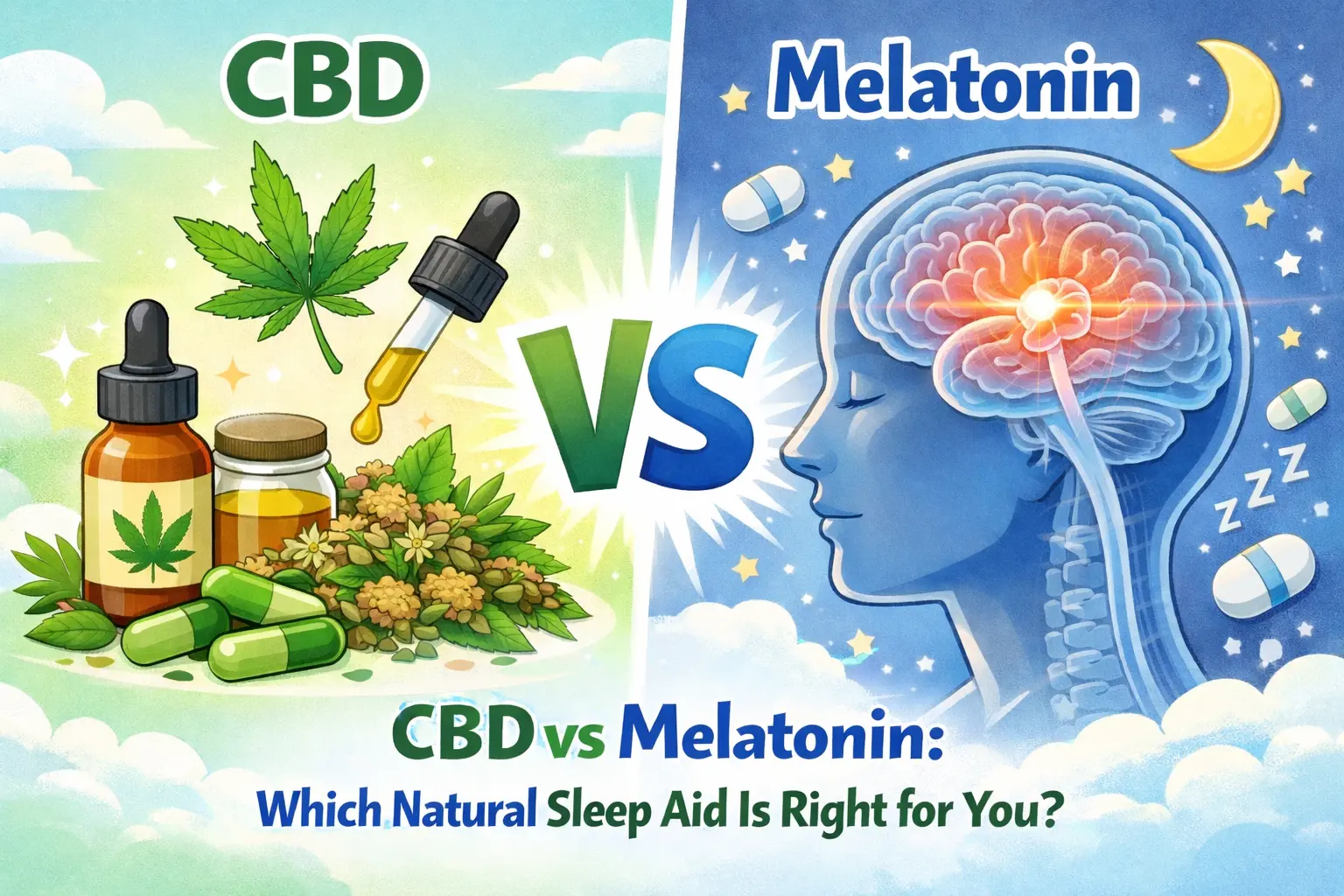
As interest in natural sleep aids grows, two supplements frequently come up in conversation: CBD (cannabidiol) and melatonin. While both are used to support better sleep, they work in very different ways. Understanding their mechanisms, benefits, and considerations can help you make an informed choice for your sleep routine.
What Is CBD?
CBD is a non-psychoactive compound derived from the cannabis plant. Unlike THC, it doesn't cause a "high" but interacts with the body's endocannabinoid system, which plays a role in regulating sleep, mood, and stress. Many people turn to CBD for relaxation, stress reduction, and mild sleep support.
Potential Benefits for Sleep:
• Reduces anxiety: Lowering anxiety can help you fall asleep more easily.
• Eases discomfort: CBD may alleviate mild pain or inflammation that interferes with rest.
• Improves sleep quality: Some studies suggest CBD can increase deep sleep cycles, though research is still emerging.
What Is Melatonin?
Melatonin is a hormone naturally produced by the pineal gland in response to darkness. It signals your body that it's time to sleep and helps regulate the circadian rhythm. Supplemental melatonin is widely used to combat sleep disturbances, especially those caused by shift work or jet lag.
Potential Benefits for Sleep:
• Regulates the sleep-wake cycle: Helps align your body clock.
• Eases insomnia: Particularly effective for people struggling to fall asleep at a consistent time.
• Supports shift workers and travelers: Adjusts sleep patterns disrupted by irregular schedules or time zones.
Key Differences Between CBD and Melatonin
Source: • CBD: Cannabis plant • Melatonin: Pineal gland (hormone supplement)
Mechanism: • CBD: Modulates endocannabinoid system, stress, and discomfort • Melatonin: Signals circadian rhythm to induce sleepiness
Best For: • CBD: Stress-related insomnia, pain interference • Melatonin: Sleep onset issues, circadian rhythm disruptions
Side Effects: • CBD: Mild drowsiness, dry mouth, changes in appetite • Melatonin: Headache, dizziness, vivid dreams
Onset: • CBD: Can take 30–60 minutes • Melatonin: Usually 20–60 minutes
Long-Term Use: • CBD: Generally well-tolerated; ongoing research • Melatonin: Safe for short-term use; long-term effects less studied
Choosing the Right Sleep Aid for You
If anxiety or pain keeps you awake: CBD may be more suitable due to its calming and anti-inflammatory properties.
If you have trouble falling asleep at a consistent bedtime: Melatonin could help reset your internal clock.
Consider timing and dosage: Start low, monitor how your body responds, and consult a healthcare professional if you're combining supplements or have medical conditions.
Lifestyle matters: Supplements work best when paired with good sleep hygiene practices like a regular schedule, screen-free wind-down time, and a calm sleep environment.
Final Thoughts
Both CBD and melatonin can be helpful tools for improving sleep, but they target different underlying causes. Understanding your personal sleep challenges, lifestyle, and health considerations is key to choosing the right aid. Experiment mindfully, track your results, and integrate these supplements as part of a holistic approach to sleep.
Better sleep isn't about a single solution—it's about finding the combination that works for your body and routine.