Glycine: The Underappreciated Sleep Aid
Discover how glycine supports natural sleep by lowering body temperature, calming the nervous system, and improving sleep quality without sedation.
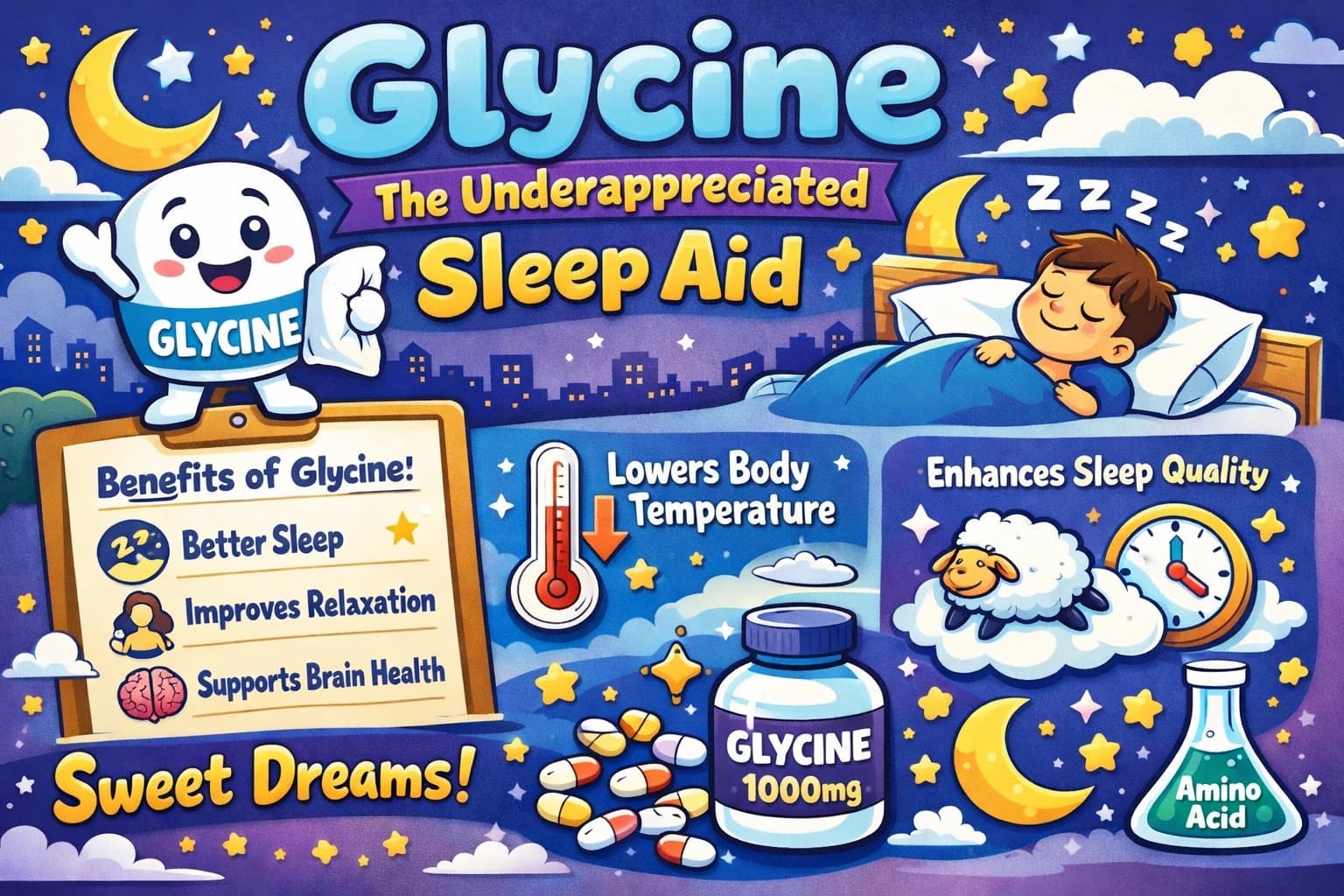
When people think of sleep aids, they usually think of melatonin, magnesium, or herbal remedies. Yet one of the simplest and most overlooked compounds that supports sleep is glycine. Glycine is not an exotic herb or a synthetic drug—it's a basic amino acid your body already uses every day.
Despite its simplicity, glycine plays a powerful role in calming the nervous system, lowering body temperature, and helping the brain transition into deeper, more restorative sleep.
What Is Glycine?
Glycine is an amino acid, which means it's one of the building blocks of proteins. Your body uses it to support muscle tissue, brain function, and nervous system regulation. It is naturally found in foods such as meat, fish, eggs, and bone broth, and your body can produce small amounts on its own.
However, modern diets and high stress levels may limit how much glycine is available for optimal nervous system support.
Beyond its structural role, glycine also functions as a neurotransmitter, meaning it directly influences how the brain communicates and relaxes.
How Glycine Helps You Fall Asleep
Unlike sedatives that force sleep, glycine works by preparing your body for sleep naturally.
Lowers Core Body Temperature Sleep begins when your body temperature drops slightly. Glycine helps speed up this cooling process, signaling to your brain that it's time to sleep.
Calms Brain Activity Glycine acts as an inhibitory neurotransmitter, reducing overstimulation in the nervous system and helping quiet racing thoughts.
Improves Sleep Quality Research has shown that glycine can help people enter deeper sleep stages, leading to more restorative rest.
Helps You Fall Asleep Faster By relaxing both the mind and body, glycine reduces the time it takes to transition into sleep.
It supports the natural sleep process rather than overriding it.
Glycine and Next-Day Energy
One of glycine's most valuable benefits is that it improves how you feel the next morning. People who support their glycine levels often report:
- Less morning grogginess
- Improved mental clarity
- Better daytime focus
- Reduced fatigue
This happens because deeper sleep allows the brain and body to recover more effectively.
Better sleep quality—not just longer sleep—is what improves daytime performance.
Why Many People Don't Get Enough Glycine
Traditional diets included more glycine-rich foods, especially slow-cooked meats and bone broths. Modern eating habits often emphasize processed foods and muscle meats while excluding connective tissues, which are richer in glycine.
At the same time, stress increases the nervous system's need for calming neurotransmitters. This creates a gap between what the body needs and what it receives.
Over time, this imbalance can contribute to poor sleep quality and nervous system overstimulation.
Glycine as a Simple Sleep Support Option
Because glycine is naturally used by the body, supporting glycine levels can help restore balance rather than introduce something foreign.
It may be especially helpful for people who experience:
- Difficulty falling asleep
- Light, non-restorative sleep
- Mental overactivity at night
- Morning fatigue despite enough hours in bed
Glycine does not act as a sedative. Instead, it strengthens the body's natural ability to relax and enter restorative sleep.
Supporting Glycine Naturally
You can support glycine levels through:
- Protein-rich whole foods
- Collagen-containing foods like bone broth
- Consistent sleep routines
- Stress management habits
Some people also use purified glycine supplements when dietary intake is insufficient.
Like many sleep-support compounds, glycine works best alongside healthy sleep habits.
Final Thoughts
Glycine may not receive the same attention as more popular sleep aids, but its role in sleep regulation is significant. By calming the nervous system, lowering body temperature, and supporting deeper sleep, glycine helps the body transition into rest naturally.
Sometimes the most effective solutions are not the most complex—they are the ones that work quietly in the background, supporting the body's existing systems.
For those looking to improve sleep quality without heavy sedation, glycine remains one of the most underappreciated and valuable tools available.