Valerian Root: Ancient Remedy, Modern Science
Explore the 2,000-year history of valerian root for sleep, its science-backed benefits for GABA support and anxiety relief, and how modern supplements make this ancient remedy accessible today.
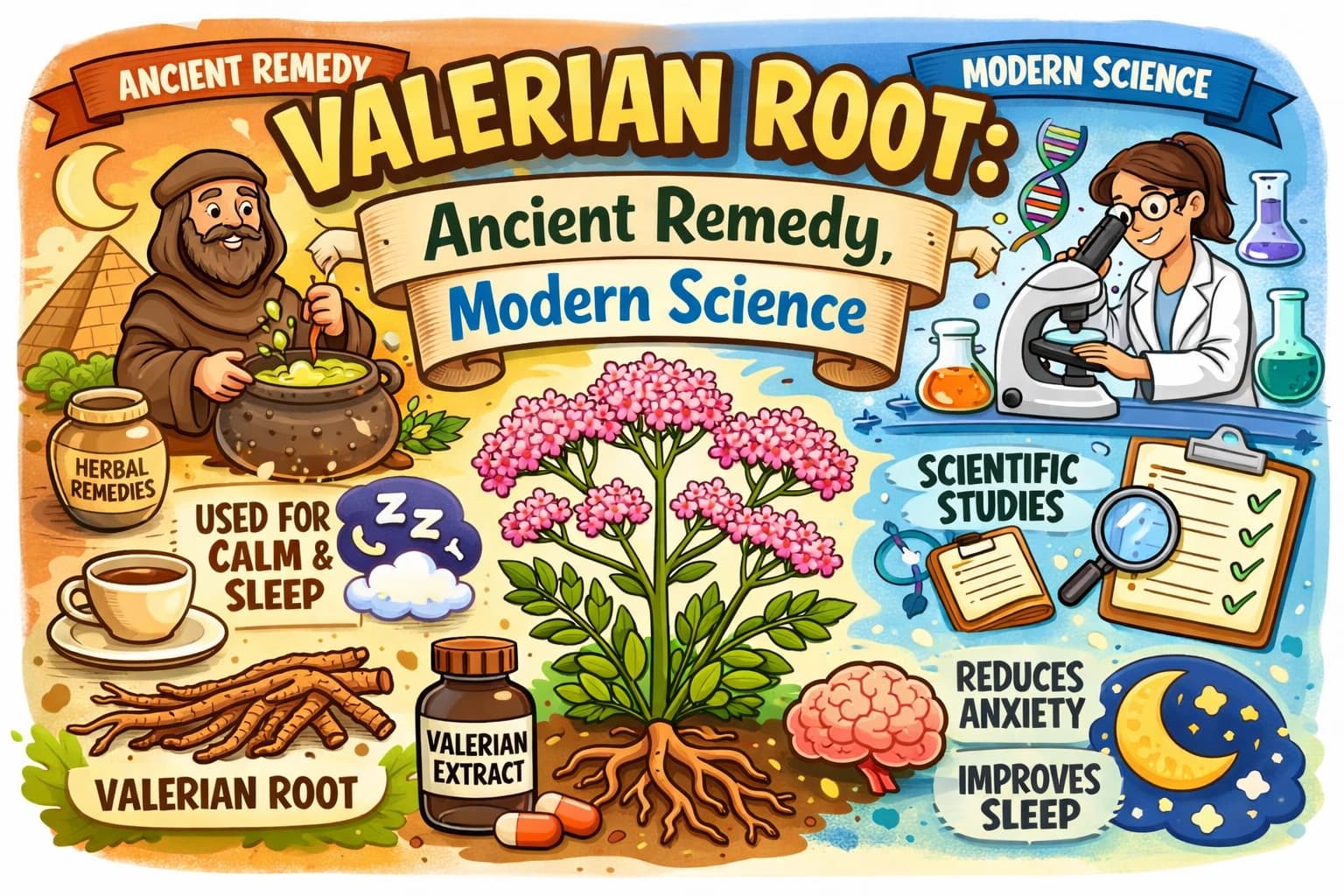
Long before modern sleep medications and laboratory-engineered supplements existed, humans relied on plants to calm the mind and restore rest. One of the most respected among these was valerian root. Used for over 2,000 years, valerian has been trusted across cultures as a natural remedy for insomnia, anxiety, and nervous tension. Today, modern science has begun to understand why this ancient plant works—and why it remains relevant in a world full of synthetic sleep aids.
Valerian root sits at the intersection of tradition and science: a natural compound with measurable effects on the nervous system.
What Is Valerian Root?
Valerian root comes from the Valeriana officinalis plant, a flowering herb native to Europe and parts of Asia. Its root contains active compounds that interact with the brain and nervous system, producing calming and sedative effects.
Historically, valerian was used to treat:
- Insomnia and difficulty falling asleep
- Anxiety and nervous restlessness
- Muscle tension
- Stress-related sleep disturbances
Unlike strong pharmaceutical sedatives, valerian works gradually by supporting the body's natural sleep mechanisms rather than forcing unconsciousness.
How Valerian Root Helps You Sleep
Modern research has shown that valerian root affects neurotransmitters—chemical messengers that regulate mood, relaxation, and sleep.
Supports GABA Activity Valerian increases the availability of GABA (gamma-aminobutyric acid), a neurotransmitter responsible for calming brain activity. Higher GABA levels help slow racing thoughts and prepare the brain for sleep.
Reduces Sleep Latency Valerian can help you fall asleep faster by calming nervous system activity.
Improves Sleep Quality Rather than acting as a knockout agent, valerian promotes deeper, more natural sleep cycles.
Reduces Nighttime Awakenings Many users report fewer interruptions during sleep.
This makes valerian particularly useful for people whose insomnia is driven by stress, anxiety, or mental overstimulation.
Why Ancient Remedies Still Matter Today
Despite advances in modern medicine, sleep problems have become more common. Artificial lighting, screens, irregular routines, and chronic stress constantly stimulate the nervous system. Many modern sleep medications act quickly, but they often work by suppressing brain activity rather than restoring balance.
Natural compounds like valerian work differently. Instead of overriding the body, they support existing biological pathways. This often results in gentler effects and fewer disruptions to natural sleep architecture.
Ancient remedies developed through observation and repeated use over centuries. Modern science now confirms many of these effects at a biochemical level.
Is Valerian Root a Natural Drug?
In simple terms, yes—valerian can be considered a natural sedative compound. The difference is its origin and mechanism.
All effective sleep aids—whether plant-based or synthetic—work by influencing the nervous system. The distinction lies in how they interact with the body:
- Synthetic drugs: Often highly concentrated and fast-acting
- Natural compounds like valerian: Gradual, supportive, and closer to the body's natural chemistry
Valerian does not "force" sleep. Instead, it creates the conditions necessary for sleep to occur naturally.
This makes it particularly useful for long-term sleep hygiene when used appropriately.
Forms of Valerian Root
Valerian can be consumed in several forms:
- Dried root tea
- Capsules
- Liquid extracts or tinctures
- Powdered supplements
Tea is the most traditional method, while capsules provide convenience and consistent dosage.
What If You Don't Have Access to Valerian Root?
Not everyone has access to fresh valerian root or high-quality herbal preparations. This is where modern supplements play an important role.
Many supplements contain standardized valerian extract, ensuring consistent potency and reliable effects. These products are designed to preserve the plant's active compounds in a stable, accessible form.
In cases where valerian itself is unavailable, other sleep-support supplements may help target similar biological pathways, such as those that support nervous system relaxation and neurotransmitter balance.
Supplements are not replacements for nature—they are extensions of it. They make beneficial compounds accessible regardless of geography, season, or availability.
Who May Benefit Most From Valerian Root
Valerian is especially helpful for people experiencing:
- Difficulty falling asleep
- Stress-related insomnia
- Mental hyperactivity at night
- Mild anxiety interfering with rest
- Irregular sleep schedules
It is less about sedation and more about restoring the body's ability to relax.
How to Use Valerian Safely
Most people take valerian 30–60 minutes before bedtime.
Consistency is important. Some individuals notice immediate effects, while others experience improvements over several days or weeks as the nervous system gradually stabilizes.
Valerian is not intended to override severe medical conditions but to support healthy sleep patterns.
Natural Remedies and Modern Adaptation
Human progress has always involved combining traditional knowledge with modern tools. Plants like valerian laid the foundation for many modern sleep therapies. Today, supplements allow these same compounds to be used in precise, convenient forms.
The goal is not to choose between ancient and modern—but to use both wisely.
Nature provides the blueprint. Science improves accessibility.
Final Thoughts
Valerian root is one of the oldest and most trusted natural sleep remedies. Its ability to calm the nervous system, reduce anxiety, and support natural sleep makes it highly relevant even today. While traditional preparations like teas remain effective, modern supplements allow more people to benefit from valerian when access to the raw plant is limited.
Sleep is not something the body needs to be forced into—it needs to be supported. Valerian root, whether in its natural form or as a supplement, offers a time-tested way to help the mind and body return to rest naturally.