Acupressure Points for Insomnia Relief
Learn specific acupressure points that calm the nervous system, reduce anxiety, and promote natural sleep onset through gentle pressure techniques.
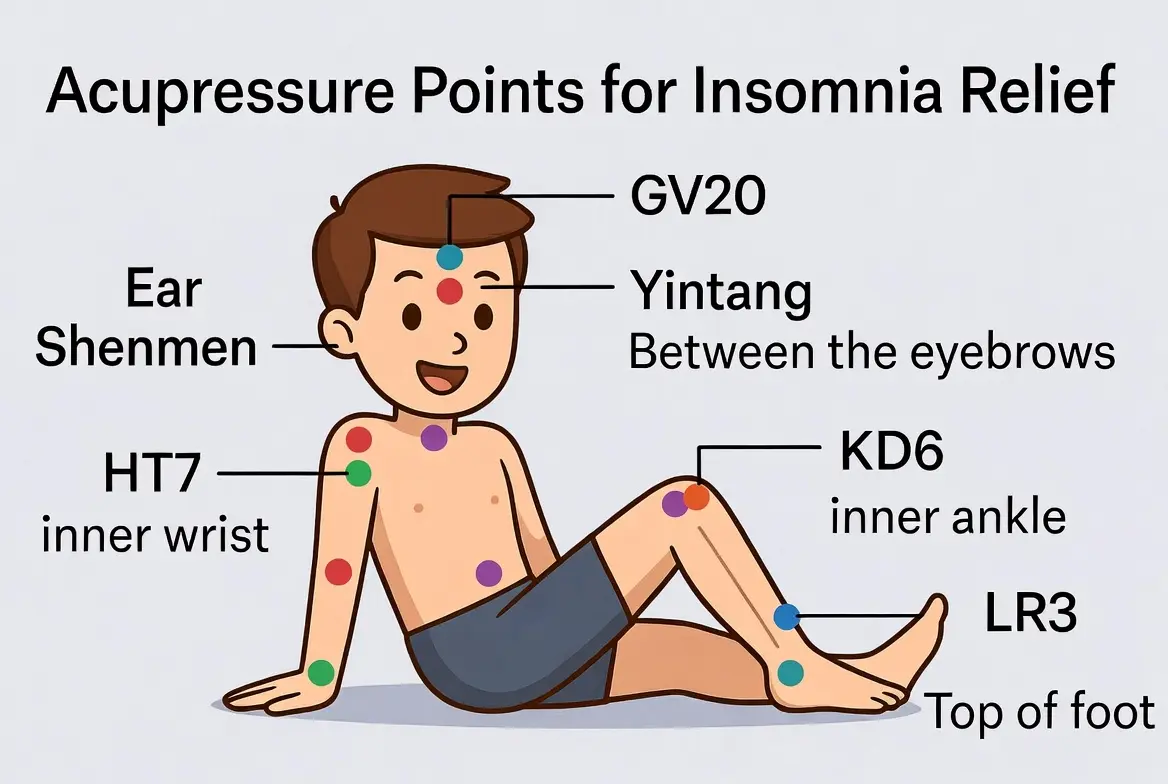
When sleep doesn't come easily, most people assume the solution must be complex—supplements, devices, or medications. But one of the most effective sleep-support tools is built into your own body.
Acupressure, a technique rooted in traditional East Asian medicine, involves applying gentle pressure to specific points that regulate stress, circulation, and nervous system activity. Modern research suggests that stimulating certain points can reduce anxiety, slow heart rate, and promote parasympathetic nervous system activation—the state required for sleep.
The technique is simple, safe, and can be done in bed within minutes.
How Acupressure Helps You Fall Asleep
Sleep requires your nervous system to shift from alert mode (sympathetic) to rest mode (parasympathetic).
Stress, screens, and mental activity keep your body in alert mode.
Acupressure helps by:
- Reducing nervous system arousal
- Lowering heart rate
- Relaxing muscle tension
- Reducing anxiety
- Improving circulation
These signals tell your brain that it is safe to sleep.
Many people feel calmer within minutes of applying pressure.
How to Apply Acupressure Correctly
You do not need strength—only gentle, steady pressure.
Basic technique:
- Use your thumb, finger, or knuckle
- Apply firm but comfortable pressure
- Hold for 30–90 seconds
- Breathe slowly while applying pressure
- Repeat on both sides if applicable
You may feel mild tenderness, warmth, or relaxation. Sharp pain means you are pressing too hard.
Point 1: Anmian (Peaceful Sleep Point)
This is one of the most effective points specifically for insomnia.
Location: Behind the ear, slightly below the bony bump, toward the neck.
Benefits:
- Promotes sleep onset
- Reduces nighttime waking
- Calms anxiety
- Relaxes the nervous system
How to use: Apply gentle circular pressure for 1–2 minutes on each side.
This point is especially helpful when stress prevents sleep.
Point 2: Shenmen (Spirit Gate)
This point is strongly associated with calming the mind.
Location: On the wrist crease, aligned with the pinky finger, in the small hollow.
Benefits:
- Reduces anxiety
- Calms racing thoughts
- Supports emotional relaxation
- Helps with stress-related insomnia
How to use: Press gently with your thumb and hold for 60 seconds.
Many people notice immediate calming effects.
Point 3: Yin Tang (Third Eye Point)
This point is associated with mental quietness.
Location: Between the eyebrows.
Benefits:
- Reduces mental overactivity
- Relieves stress
- Promotes relaxation
- Helps with sleep onset
How to use: Apply gentle pressure or small circular motions for 1 minute.
This point works especially well combined with slow breathing.
Point 4: Kidney 1 (Grounding Point)
This point helps shift the body into a grounded, relaxed state.
Location: On the sole of the foot, about one-third down from the toes.
Benefits:
- Reduces restlessness
- Promotes full-body relaxation
- Helps calm an overactive nervous system
How to use: Press firmly with your thumb while seated or lying down.
This point is particularly helpful if your body feels tense.
Point 5: Pericardium 6 (Inner Wrist Point)
This point helps regulate heart rate and calm the nervous system.
Location: Three finger widths below the wrist crease, centered on the inner forearm.
Benefits:
- Reduces anxiety
- Calms heart palpitations
- Promotes relaxation
How to use: Apply steady pressure for 60–90 seconds.
This point is useful when stress or emotional tension prevents sleep.
A Simple 5-Minute Bedtime Acupressure Routine
You do not need to use every point.
Try this sequence:
Step 1: Shenmen (both wrists) – 1 minute Step 2: Yin Tang (between eyebrows) – 1 minute Step 3: Anmian (behind ears) – 2 minutes Step 4: Kidney 1 (feet) – 1 minute
Breathe slowly during the process.
Most people feel noticeably calmer afterward.
When to Use Acupressure
Best times include:
- 10–20 minutes before bed
- After getting into bed
- When waking during the night
- During stressful evenings
Consistency improves effectiveness.
Combining Acupressure With Other Sleep Habits
Acupressure works best alongside good sleep hygiene.
Combine it with:
Dim lighting before bed Reduced screen exposure Slow breathing Consistent sleep schedule
These signals reinforce each other.
What Acupressure Feels Like
Common sensations include:
- Warmth
- Heaviness
- Tingling
- Deep relaxation
Some people feel sleepy immediately.
Others notice gradual improvement over days or weeks.
Is Acupressure Safe?
Acupressure is generally very safe.
Avoid if you have:
- Injured areas
- Inflammation
- Severe pain at the point
Use gentle pressure only.
It should never feel harmful.
Why It Works So Effectively at Night
Sleep is controlled by the nervous system, not just physical tiredness.
Acupressure directly influences the nervous system through sensory pathways, helping shift the body toward rest.
This makes it especially useful for:
- Stress-related insomnia
- Racing thoughts
- Difficulty relaxing
It addresses the root cause—nervous system activation.
Final Thoughts
Falling asleep is not something you force—it is something you allow. Acupressure helps remove the tension and nervous system resistance that prevent sleep.
By spending just a few minutes stimulating these points, you can signal safety, calm, and readiness for rest.
Over time, this simple practice can become a reliable part of your nightly routine, helping your body transition naturally into deep, restorative sleep.