Adaptogenic Herbs for Stress & Sleep
Discover how adaptogenic herbs like ashwagandha and rhodiola regulate cortisol, calm the nervous system, and create the biological conditions for natural, restorative sleep.
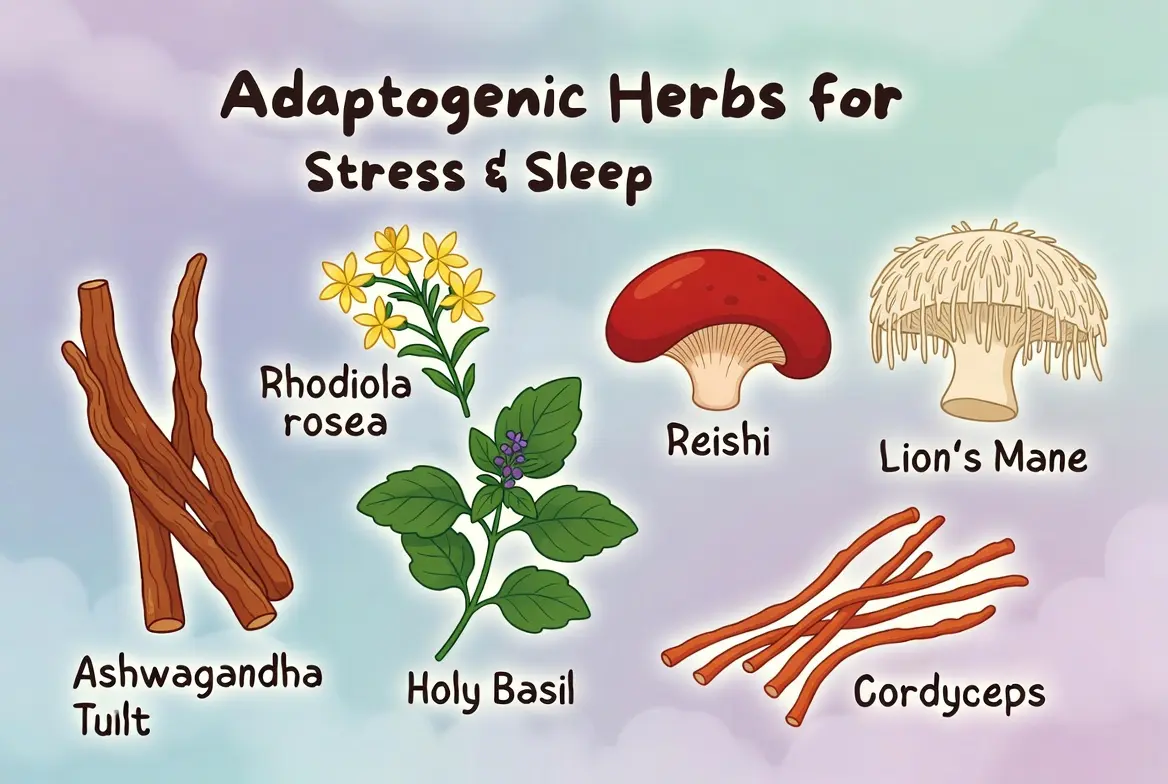
Stress is one of the most common reasons people struggle with sleep. Even when the body feels physically tired, the nervous system may remain alert. Thoughts continue, muscles stay slightly tense, and the brain resists transitioning into rest.
Sleep does not begin when you decide to sleep. It begins when your nervous system feels safe enough to power down.
Adaptogenic herbs are natural compounds that help the body regulate its stress response. Instead of forcing sedation, they help stabilize cortisol levels, calm the nervous system, and support the biological processes that allow sleep to happen naturally.
For centuries, these herbs have been used in traditional medicine systems. Modern research now confirms many of their effects on stress, nervous system balance, and sleep quality.
What Are Adaptogens?
Adaptogens are herbs and plant compounds that help the body adapt to physical, mental, and emotional stress.
They work primarily by supporting the hypothalamic-pituitary-adrenal (HPA) axis, the system that controls your stress response and cortisol production.
Cortisol is essential during the day because it keeps you alert and functional. But if cortisol remains elevated at night, it prevents sleep.
Adaptogens help regulate cortisol so it rises when needed and falls when it should.
This restores the natural rhythm required for healthy sleep.
Adaptogens do not act like sleeping pills. They improve the internal environment that allows sleep to occur naturally.
How Stress Disrupts Sleep
Chronic stress keeps the nervous system in a state of hyper-alertness.
This produces several effects:
- increased heart rate
- elevated cortisol
- increased brain activity
- muscle tension
- delayed melatonin release
Even if you lie still, your nervous system remains partially active.
Sleep becomes lighter, shorter, and less restorative.
Adaptogens help reverse this by calming the stress response at its source.
Why Modern Life Increases the Need for Adaptogenic Support
Human biology evolved for short bursts of stress followed by recovery.
Modern stress is constant.
Deadlines, screens, artificial light, and mental overload prevent the nervous system from fully shutting down.
Over time, this leads to nervous system fatigue and sleep disruption.
Adaptogens help restore balance in this overstimulated environment.
Major Adaptogenic Herbs That Support Sleep
Different adaptogens support sleep in different ways. Some calm the nervous system directly, while others regulate cortisol or improve emotional resilience.
Ashwagandha: The Stress Regulator
Ashwagandha is one of the most widely studied adaptogens for stress and sleep support.
It helps reduce cortisol levels and stabilize nervous system activity.
Benefits include:
- reduced stress and anxiety
- improved sleep quality
- faster sleep onset
- improved nervous system recovery
Ashwagandha supports the body's transition from alertness into relaxation.
It does not force sleep, but makes sleep easier to achieve.
Rhodiola Rosea: Stress Resistance and Energy Balance
Rhodiola is known for improving the body's resilience to stress.
It helps prevent nervous system exhaustion caused by chronic stress.
While it is often used to improve daytime energy, its long-term effect helps stabilize sleep by reducing overall stress load.
Benefits include:
- improved stress tolerance
- reduced mental fatigue
- balanced nervous system activity
Balanced daytime stress responses improve nighttime sleep.
Holy Basil (Tulsi): Nervous System Stabilizer
Holy Basil has been used traditionally to calm the nervous system and support emotional balance.
It helps regulate cortisol and reduce stress-induced sleep disruption.
Benefits include:
- reduced anxiety
- improved emotional stability
- calmer nervous system activity
A stable nervous system transitions into sleep more easily.
Reishi Mushroom: Deep Relaxation Support
Reishi is often referred to as a calming adaptogen.
It supports immune function and nervous system relaxation.
Many people use it to support deeper, more restorative sleep.
Benefits include:
- improved sleep depth
- reduced nervous system overactivity
- improved recovery
It supports long-term sleep stability rather than immediate sedation.
Eleuthero (Siberian Ginseng): Stress Adaptation
Eleuthero improves the body's ability to tolerate stress without exhausting the nervous system.
This helps prevent long-term stress-related sleep disruption.
Benefits include:
- improved stress resilience
- improved nervous system stability
Balanced stress responses improve sleep timing.
How Adaptogens Influence Cortisol Rhythm
Healthy cortisol follows a natural daily rhythm.
High in the morning Low at night
Stress disrupts this pattern.
Many people experience elevated cortisol in the evening.
This makes falling asleep difficult.
Adaptogens help normalize this rhythm.
As cortisol declines properly at night, melatonin can rise naturally.
Sleep becomes easier.
Adaptogens Do Not Act Like Sedatives
Sedatives suppress brain activity directly.
Adaptogens work differently.
They improve the body's stress regulation systems.
This allows sleep to occur naturally.
This approach supports long-term sleep health rather than short-term sedation.
Benefits Beyond Sleep
Because adaptogens support nervous system balance, they also improve daytime function.
Many people notice:
- improved focus
- reduced anxiety
- improved emotional stability
- improved stress tolerance
- improved recovery
Sleep quality improves as part of broader nervous system balance.
Who May Benefit Most From Adaptogens
Adaptogens may be especially helpful for people experiencing:
- chronic stress
- difficulty falling asleep
- nighttime anxiety
- mental overactivity at night
- burnout or nervous system fatigue
These conditions are strongly connected to stress hormone imbalance.
Adaptogens and the Modern Nervous System
Modern environments constantly stimulate the nervous system.
Artificial light, digital stimulation, and mental demands prevent full recovery.
Adaptogens help restore the body's natural stress response systems.
They help the nervous system return to a balanced state.
Balanced nervous systems sleep more easily.
Natural Sources vs Supplement Forms
Adaptogenic herbs exist in natural plant form and standardized supplement extracts.
Traditional use involved consuming the whole plant.
Modern supplements provide concentrated forms for consistent intake.
Both approaches aim to support the same biological systems.
Diet, lifestyle, and stress management remain essential foundations.
Adaptogens support—not replace—these habits.
How Long Adaptogens Take to Work
Unlike sedatives, adaptogens often work gradually.
Some calming effects may appear quickly.
Full benefits usually develop over weeks of consistent use.
This reflects their role in restoring biological balance rather than forcing immediate changes.
Supporting Adaptogens With Lifestyle Habits
Adaptogens are most effective when combined with healthy routines.
These include:
Consistent sleep schedule Evening relaxation habits Reduced late-night stimulation Balanced nutrition Regular physical activity
These habits reinforce nervous system stability.
Safety and Responsible Use
Because adaptogens influence hormonal and nervous system regulation, they should be used responsibly.
Consult a qualified healthcare professional before using herbal supplements, especially if you have medical conditions, are pregnant, or take medications.
Natural compounds are biologically active.
Proper use ensures safety and effectiveness.
Why Stress Regulation Is Essential for Sleep
Sleep is not controlled by fatigue alone.
It is controlled by nervous system safety.
If the body perceives stress, it delays sleep—even when exhausted.
Adaptogens help restore the biological balance required for rest.
They support the systems that allow sleep to occur naturally.
Final Thoughts
Sleep and stress are deeply connected. Chronic stress disrupts hormone balance, nervous system stability, and the natural timing of sleep.
Adaptogenic herbs help the body regulate its stress response, stabilize cortisol rhythms, and restore conditions that support restorative sleep.
They do not override your biology—they help your biology function correctly.
In a world where stress is constant, supporting the systems that regulate stress may be one of the most effective ways to protect long-term sleep health.