Breathwork for Bedtime: Pranayama Techniques
Master pranayama breathing techniques to calm your nervous system, reduce racing thoughts, and fall asleep faster using natural breath control methods.
Falling asleep is not just about physical tiredness. It depends heavily on whether your nervous system is calm enough to let sleep happen. Many people lie in bed exhausted but mentally alert, unable to transition into rest.
One of the fastest and most reliable ways to calm the nervous system is through breath control, known traditionally as pranayama.
Pranayama techniques directly influence heart rate, brain activity, and stress hormones. By slowing and controlling your breathing, you signal to your brain that it is safe to relax.
This shifts your body from a state of alertness into a state that supports sleep.
Unlike supplements or medications, breathwork works immediately and naturally.
Why Breathing Affects Sleep So Strongly
Breathing is the only automatic body function you can consciously control.
When you are stressed or alert, breathing becomes:
- fast
- shallow
- irregular
This keeps the nervous system activated.
When breathing becomes:
- slow
- deep
- controlled
the parasympathetic nervous system activates. This system lowers heart rate, reduces cortisol, and prepares the body for sleep.
Your breath acts as a direct switch between alertness and relaxation.
How Pranayama Prepares the Brain for Sleep
Slow breathing increases activity in the vagus nerve, which connects the brain, heart, and digestive system.
This produces measurable changes:
- reduced heart rate
- reduced blood pressure
- reduced mental activity
- increased melatonin readiness
Brain waves begin slowing toward sleep-like patterns.
This makes sleep onset faster and more natural.
Practicing breathwork regularly trains your nervous system to relax more easily.
When to Practice Breathwork for Sleep
The most effective time is 10–20 minutes before bed.
It can also be used:
- after turning off lights
- when waking during the night
- during stressful evenings
- anytime the mind feels overstimulated
Even 5 minutes can produce noticeable effects.
Consistency strengthens the results.
Preparing Your Body for Breathwork
Before beginning:
Lie on your back or sit comfortably.
Relax your shoulders and jaw.
Place one hand on your chest and one on your abdomen.
Close your eyes.
The goal is to remove muscular tension so breathing can become smooth and effortless.
Technique 1: Diaphragmatic Breathing (Foundational Technique)
This is the most important breathing pattern for sleep.
Many adults breathe using only their chest. This shallow breathing keeps the nervous system partially alert.
Diaphragmatic breathing engages the lower lungs.
Steps:
Inhale slowly through your nose for 4 seconds
Allow your abdomen to rise
Keep your chest relatively still
Exhale slowly through your nose or mouth for 6 seconds
Allow your abdomen to fall
Continue for 5–10 minutes.
Benefits:
- activates relaxation response
- reduces heart rate
- improves oxygen efficiency
- prepares body for deeper sleep
Longer exhalations are especially calming.
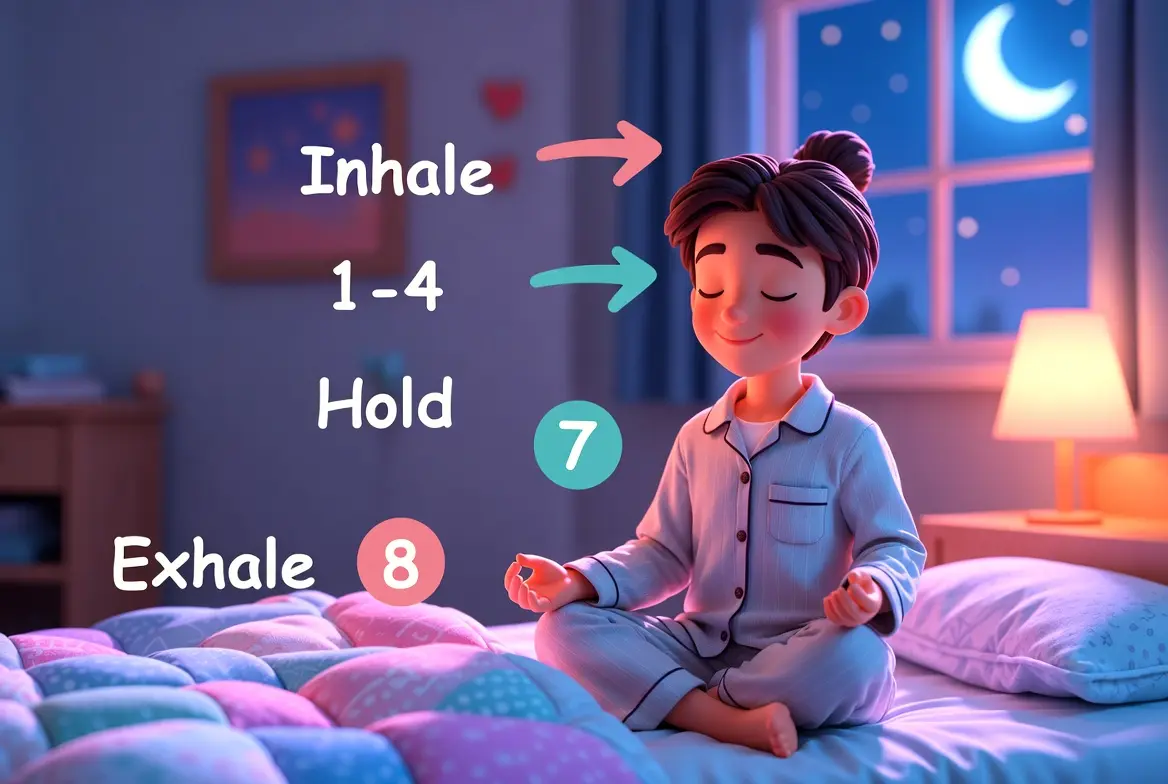
Technique 2: The 4-7-8 Breathing Method
This technique is widely used for rapid nervous system calming.
It slows breathing rhythm and quiets mental activity.
Steps:
Inhale through your nose for 4 seconds
Hold your breath for 7 seconds
Exhale slowly through your mouth for 8 seconds
Repeat 4–8 cycles.
The extended exhale signals the nervous system to relax deeply.
Benefits:
- reduces anxiety quickly
- slows brain activity
- helps initiate sleep faster
Many people fall asleep during or shortly after this exercise.
Technique 3: Alternate Nostril Breathing (Nadi Shodhana)
This technique balances nervous system activity and improves mental calmness.
It is especially useful when the mind feels restless.
Steps:
Sit comfortably
Use your right thumb to close your right nostril
Inhale slowly through your left nostril
Close your left nostril with your finger
Open your right nostril and exhale slowly
Inhale through the right nostril
Switch and exhale through the left
Continue for 3–5 minutes.
Benefits:
- balances brain hemispheres
- reduces mental overactivity
- improves emotional calm
This technique stabilizes breathing rhythm and mental focus.
Technique 4: Box Breathing (Structured Relaxation)
Box breathing creates a steady breathing rhythm that calms the nervous system.
It is simple and effective.
Steps:
Inhale for 4 seconds Hold for 4 seconds Exhale for 4 seconds Hold for 4 seconds
Repeat several cycles.
Benefits:
- stabilizes heart rate
- reduces stress response
- improves breathing control
This technique is often used to manage stress and anxiety.
Technique 5: Extended Exhale Breathing
Exhalation activates relaxation more strongly than inhalation.
Extending the exhale increases this effect.
Steps:
Inhale for 4 seconds Exhale for 6–8 seconds
Continue for several minutes.
This technique is simple but highly effective.
Benefits:
- rapidly calms the nervous system
- reduces physical tension
- improves sleep readiness
Many people naturally fall asleep during this pattern.
Why Nose Breathing Matters
Breathing through the nose improves sleep preparation.
Nasal breathing:
- filters air
- improves oxygen absorption
- slows breathing naturally
- supports nervous system calmness
Mouth breathing is associated with lighter sleep and increased restlessness.
Practicing nasal breathing improves sleep quality over time.
How Breathwork Reduces Racing Thoughts
Racing thoughts are often driven by nervous system activation.
Slow breathing reduces brain stimulation.
It gives your mind a simple focus point.
This reduces mental noise.
The brain begins shifting toward sleep-compatible activity.
Breathwork interrupts the stress cycle.
Combining Breathwork With Your Evening Routine
Breathwork becomes more effective when combined with other sleep-supportive habits:
Reducing screen exposure before bed Keeping lights dim Maintaining consistent sleep times Practicing relaxation techniques regularly
These signals reinforce each other.
Sleep becomes easier and more predictable.
How Long Until Breathwork Improves Sleep
Some people notice immediate improvements.
For others, benefits increase over days or weeks.
With consistent practice, the nervous system adapts.
Relaxation becomes easier.
Sleep onset becomes faster.
Signs Breathwork Is Working
You may notice:
- slower heart rate
- reduced muscle tension
- calmer thoughts
- easier sleep onset
- deeper breathing naturally
These indicate nervous system relaxation.
Breathwork Is a Natural Sleep Tool Always Available
Unlike external solutions, breathing is always accessible.
It requires no equipment, supplements, or special environment.
It works directly on the nervous system—the system that controls sleep itself.
By practicing pranayama techniques regularly, you train your body to transition smoothly into rest.
Sleep becomes less of a struggle and more of a natural process.