Meditation Techniques for Insomnia: A Complete Guide
Master proven meditation techniques to calm your nervous system, quiet racing thoughts, and fall asleep naturally without forcing rest.
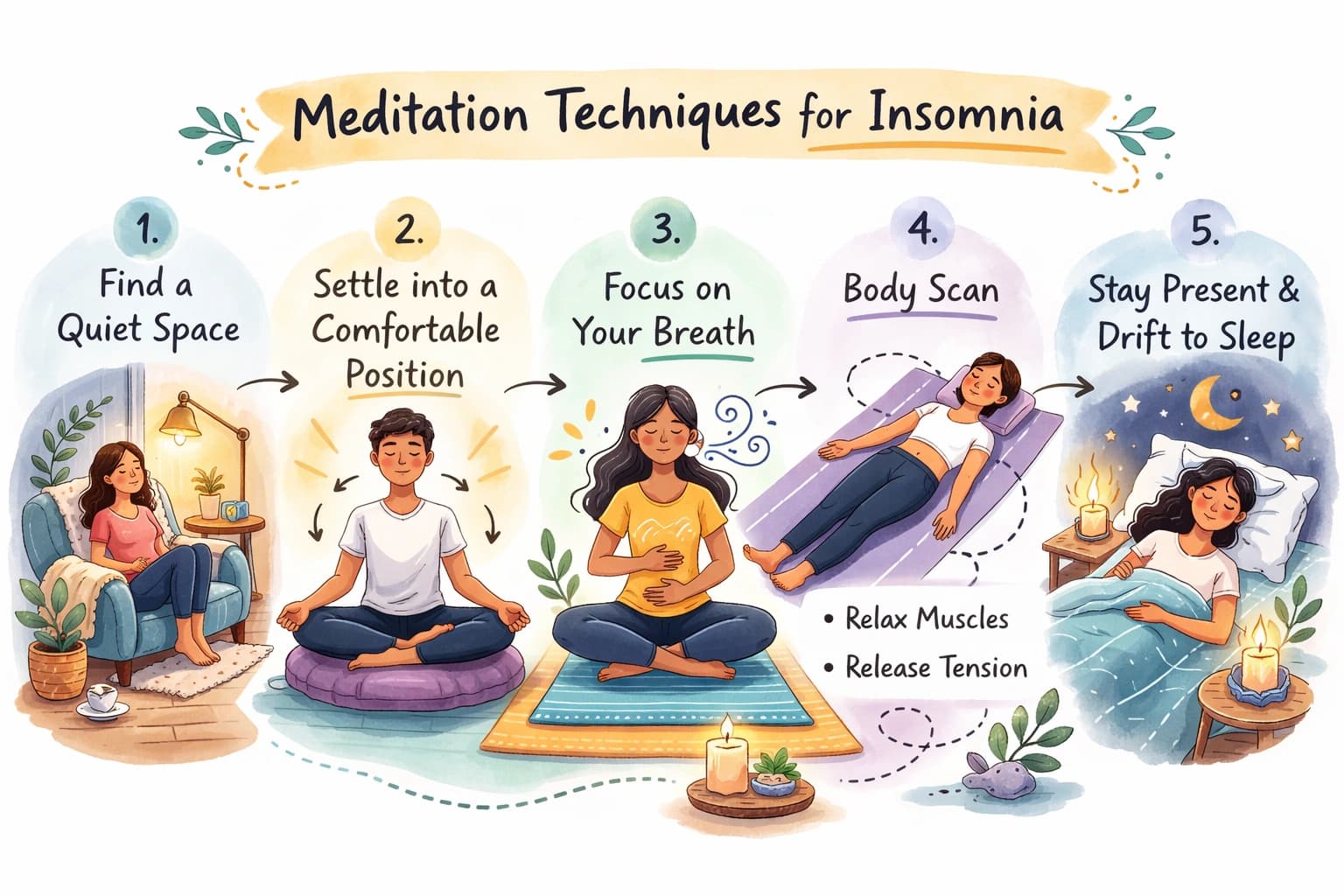
Sleep is not controlled by force. It is controlled by permission.
You cannot command your brain to sleep. You can only remove the obstacles that keep it awake. The most common obstacle in modern life is not noise, light, or discomfort—it is the mind itself. Thoughts continue running long after the body is exhausted. The nervous system remains alert even when you are lying in darkness.
Meditation works because it directly addresses the root cause of insomnia: an overactive nervous system and an overactive mind.
It teaches your brain how to transition from alertness into rest.
This guide explains the science behind meditation and provides practical techniques you can use every night.
Why Insomnia Happens in the Modern Brain
Your nervous system has two primary modes:
Sympathetic nervous system: Alert, focused, defensive, problem-solving mode.
Parasympathetic nervous system: Rest, repair, digestion, and sleep mode.
Most people try to sleep while their sympathetic system is still active.
This happens because of:
- Constant screen exposure
- Stress and responsibility
- Mental stimulation late at night
- Emotional processing
- Caffeine and irregular routines
Your body may be physically tired, but your nervous system is still on guard.
Meditation helps switch control to the parasympathetic system.
This is the biological gateway to sleep.
What Meditation Actually Does to Your Brain
Meditation is not about clearing your mind. It is about changing your relationship with mental activity.
Scientific studies show meditation:
- Reduces cortisol (stress hormone)
- Slows heart rate
- Reduces brain hyperactivity
- Increases melatonin production
- Activates sleep-supporting brain regions
Brain scans show reduced activity in the default mode network, the part of the brain responsible for constant thinking and rumination.
This makes it easier to drift into sleep.
Why Meditation Works Better Than Forcing Sleep
Trying to sleep often creates performance anxiety.
Thoughts like:
"I need to sleep now." "I only have 6 hours left." "Tomorrow will be ruined."
These thoughts activate stress.
Meditation removes urgency. It allows rest to happen naturally.
Even if you do not fall asleep immediately, meditation still provides physical and mental recovery.
Sleep often follows naturally.
When to Meditate for Sleep
You can meditate at three key times:
Before bed Prepares your nervous system for sleep.
While lying in bed Helps transition directly into sleep.
After waking during the night Prevents panic and helps you fall back asleep faster.
Consistency matters more than duration.
Technique 1: Body Scan Meditation (Most Effective for Beginners)
This technique shifts attention from thinking to physical sensation.
It reduces tension and signals safety to your nervous system.
How to do it
Lie on your back comfortably.
Close your eyes.
Bring attention to your feet.
Notice:
- Temperature
- Pressure
- Contact with the bed
Do not try to change anything.
Simply observe.
Slowly move attention upward:
Feet → calves → knees → thighs → stomach → chest → shoulders → arms → hands → neck → face
Spend 5–10 seconds on each area.
If thoughts appear, gently return attention to the body.
Why it works
Your brain cannot fully focus on physical sensation and anxious thinking at the same time.
This reduces mental activity.
Most people fall asleep before finishing the scan.
Technique 2: Breathing Meditation
Your breath is directly connected to your nervous system.
Slow breathing activates parasympathetic function.
How to do it
Close your eyes.
Breathe slowly through your nose.
Focus on the sensation of air entering and leaving.
Do not control the breath aggressively.
Simply observe it.
If helpful, count:
Inhale: 1 Exhale: 2 Inhale: 3 Exhale: 4
Continue to 10, then restart.
If you lose count, restart at 1 without frustration.
Why it works
Attention shifts away from thinking and into rhythmic sensation.
Heart rate slows naturally.
Your brain begins preparing for sleep.
Technique 3: Cognitive Shuffling (Extremely Effective for Racing Thoughts)
This technique prevents your brain from staying stuck on stressful ideas.
Instead of silence, you give your brain neutral, random content.
How to do it
Think of random, unrelated objects:
Apple Bridge Cloud Chair Mountain Book Lamp
Do not connect them into a story.
Keep them random.
This mimics the brain activity that naturally occurs before sleep.
Why it works
Sleep onset involves fragmented, non-linear thinking.
This technique recreates that state intentionally.
It prevents rumination.
Technique 4: Visualization Meditation
This technique uses calming mental imagery.
How to do it
Imagine a peaceful place:
- A quiet beach
- A forest
- A dark, quiet cabin
Imagine details:
- Sound of wind
- Temperature of air
- Texture beneath your feet
Let the scene remain slow and calm.
Avoid stimulating imagery.
Why it works
The brain responds to imagined environments similarly to real ones.
Calming imagery reduces stress signals.
Technique 5: The "Acceptance Meditation" Method
This method is powerful for chronic insomnia.
Instead of trying to sleep, you allow yourself to remain awake calmly.
How to do it
Tell yourself:
"It is okay if I do not sleep immediately." "My body will sleep when ready."
Focus on breathing.
Remove urgency.
Sleep often comes faster when pressure disappears.
Why it works
Performance anxiety is a major cause of insomnia.
Removing pressure removes the obstacle.
Technique 6: Progressive Muscle Relaxation Meditation
This combines physical and mental relaxation.
How to do it
Gently tense one muscle group for 5 seconds.
Release completely.
Move through the body:
- Feet
- Legs
- Stomach
- Arms
- Shoulders
- Face
Feel the difference between tension and relaxation.
Why it works
Physical relaxation signals safety to the brain.
This encourages sleep onset.
Technique 7: Counting Down Meditation
This is simple and highly effective.
How to do it
Count slowly from 100 to 1.
One number per breath.
If your mind wanders, restart without frustration.
Most people never reach 1.
Sleep occurs first.
What to Do When Thoughts Keep Interrupting
This is normal.
The goal is not to eliminate thoughts.
The goal is to stop engaging with them.
Treat thoughts like passing sounds.
Notice them.
Do not follow them.
Return attention gently.
Every return strengthens mental control.
How Long Meditation Takes to Work
Some people feel improvement immediately.
Others improve gradually over weeks.
Like any skill, meditation becomes easier with practice.
Your brain learns faster transitions into sleep.
Common Mistakes Beginners Make
Trying too hard
Effort creates tension.
Meditation should feel gentle.
Expecting instant silence
Thoughts will continue.
This is normal.
Judging yourself
Frustration activates stress.
Accept the process.
A Complete 15-Minute Bedtime Meditation Routine
You can follow this sequence nightly:
Minute 0–3: Slow breathing Focus on calm, natural breaths.
Minute 3–10: Body scan Move attention slowly through the body.
Minute 10–13: Visualization Imagine a calm, quiet environment.
Minute 13–15: Passive awareness Allow your mind to drift naturally.
Sleep often occurs during this phase.
Meditation vs Sleeping Pills
Sleeping pills sedate the brain artificially.
Meditation trains the brain naturally.
Benefits of meditation include:
- No dependency
- No side effects
- Improves long-term sleep ability
- Reduces anxiety overall
Meditation strengthens your nervous system.
It does not override it.
Meditation Improves More Than Sleep
Consistent meditation improves:
- Emotional control
- Stress tolerance
- Focus
- Mood stability
- Recovery
Sleep becomes easier because your nervous system becomes more stable overall.
Meditation and Sleep Debt Recovery
Poor sleep accumulates nervous system stress.
Meditation accelerates recovery by:
- Lowering cortisol
- Improving nervous system balance
- Enhancing deep sleep quality
Even short daily meditation improves resilience.
How Meditation Retrains Your Brain Long Term
Insomnia often becomes a learned pattern.
Your brain associates bed with stress.
Meditation breaks this association.
Your brain begins linking bed with calmness again.
This restores natural sleep ability.
Signs Meditation Is Working
You may notice:
- Falling asleep faster
- Fewer nighttime awakenings
- Feeling calmer at night
- Reduced racing thoughts
- Feeling rested more often
Progress may be gradual.
Consistency matters most.
If You Wake Up at 3 AM
Do not check your phone.
Do not panic.
Instead:
- Focus on breathing.
- Or perform a body scan.
- Or use cognitive shuffling.
Your nervous system can return to sleep.
The Key Principle: Sleep Follows Calm, Not Exhaustion
Many people believe extreme tiredness guarantees sleep.
It does not.
Calm nervous system activity guarantees sleep.
Meditation creates that calm state.
Final Thoughts
Sleep is a biological process guided by your nervous system, not your willpower. Meditation gives you direct influence over that system. It teaches your brain how to release tension, slow down, and transition naturally into rest.
With consistent practice, meditation becomes more than a tool. It becomes a nightly signal that the day is over and recovery has begun.
Over time, your mind stops fighting sleep—and begins allowing it.