The Gut-Sleep Connection: Microbiome & Rest
Discover how your gut microbiome influences sleep quality, neurotransmitter production, and nervous system balance—and how to support both systems for better rest.
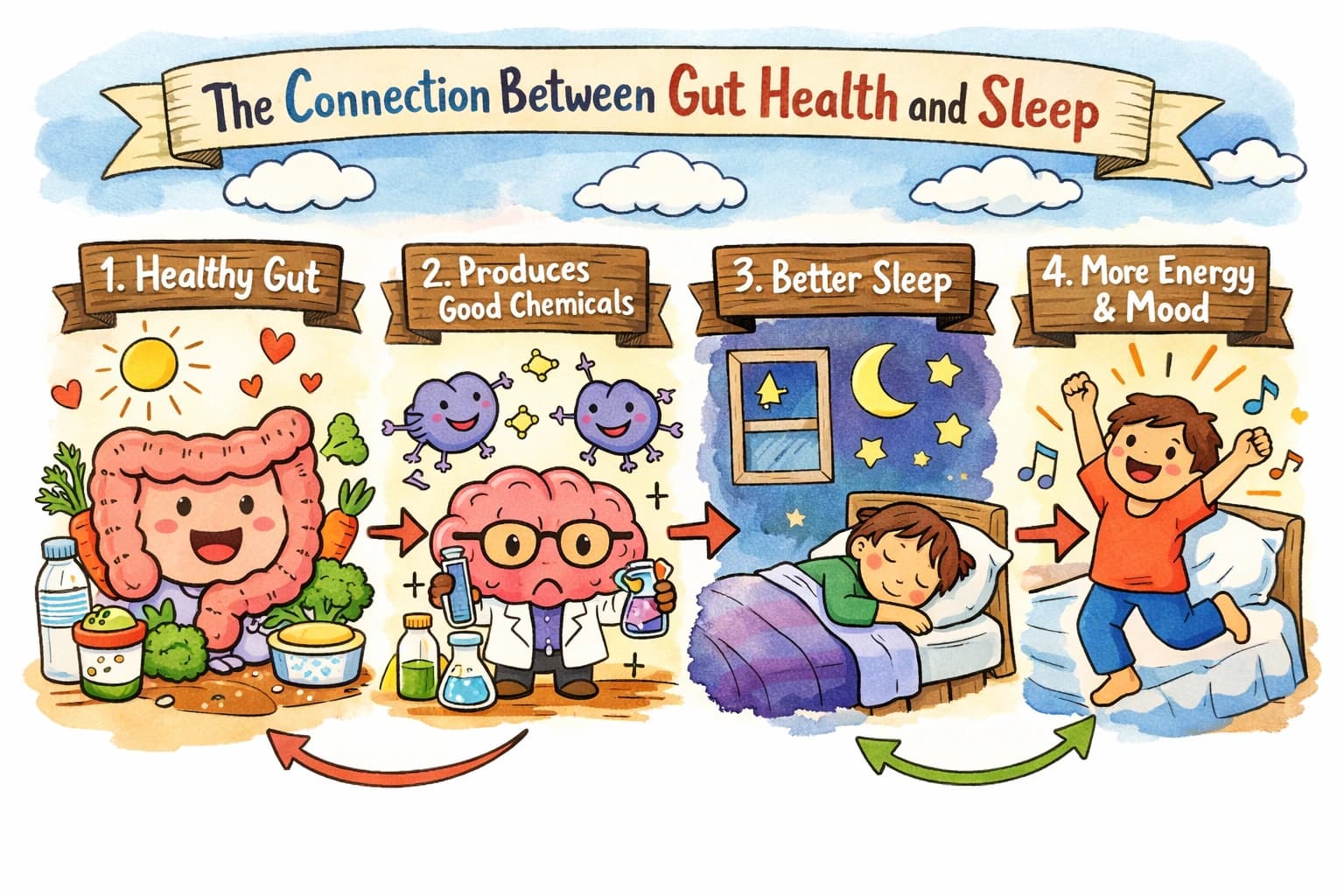
Sleep is often thought of as a brain-controlled process. While the brain is central, another system plays a surprisingly powerful role in how well you sleep: your gut.
Inside your digestive system lives a vast ecosystem of trillions of bacteria, fungi, and microorganisms known as the gut microbiome. These microorganisms do more than digest food. They influence hormones, nervous system activity, immune function, and even the neurotransmitters that control sleep.
Modern research increasingly shows that sleep quality and gut health are deeply connected. Poor gut health can disrupt sleep, and poor sleep can damage gut balance. This creates a cycle that affects energy, mood, and long-term health.
Understanding this connection allows you to improve sleep by supporting a system most people overlook.
What Is the Gut Microbiome?
The gut microbiome is a community of microorganisms living primarily in your large intestine.
These microbes help with:
- digestion and nutrient absorption
- immune system regulation
- inflammation control
- hormone production
- neurotransmitter creation
Your microbiome acts almost like a second brain. It communicates directly with your nervous system through what scientists call the gut–brain axis.
This communication influences how alert or relaxed your body feels.
The Gut–Brain Axis: A Two-Way Communication System
The gut and brain are connected through nerves, hormones, and chemical signals.
The most important connection is the vagus nerve, which directly links your digestive system to your brain.
Signals travel in both directions:
Brain → gut Gut → brain
This means stress affects digestion—and gut health affects sleep and mood.
If the gut environment is unhealthy, it can send stress signals to the brain, making relaxation and sleep more difficult.
The Gut Helps Produce Sleep-Related Neurotransmitters
Many people assume neurotransmitters are produced only in the brain. In reality, a large portion are produced or influenced in the gut.
These include:
Serotonin Regulates mood, relaxation, and sleep timing
GABA Calms nervous system activity
Melatonin precursors Support sleep onset
About 90% of serotonin is produced in the gut, not the brain.
Serotonin is later converted into melatonin, the hormone that signals sleep.
If gut health is poor, this production process becomes less efficient.
This can make sleep more difficult.
How Poor Gut Health Disrupts Sleep
When the microbiome becomes imbalanced—a condition known as dysbiosis—it affects multiple systems involved in sleep.
Increased Inflammation
Unhealthy gut bacteria increase inflammation in the body.
Inflammation activates the immune system and stress responses.
This keeps the nervous system in a state of alertness.
Chronic inflammation is strongly associated with poor sleep quality.
Increased Cortisol and Stress Hormones
Gut imbalance can increase cortisol production.
Cortisol is the body's primary stress hormone.
High cortisol at night delays sleep onset.
It also reduces deep sleep duration.
The body remains partially alert.
Reduced Melatonin Production
Since gut bacteria influence serotonin production, gut imbalance reduces melatonin availability.
Lower melatonin makes it harder to fall asleep and maintain sleep.
Sleep timing becomes less consistent.
Digestive Discomfort and Nighttime Disturbance
Bloating, gas, or digestive discomfort can activate the nervous system.
Even mild discomfort prevents deep relaxation.
Sleep becomes lighter and more fragmented.
How Poor Sleep Damages Gut Health
The relationship goes both ways.
Sleep deprivation negatively affects the microbiome.
Even short-term sleep loss can:
- reduce beneficial bacteria
- increase inflammation
- impair digestion
- weaken immune defense
This creates a cycle:
Poor gut health → poor sleep → worse gut health
Breaking this cycle improves both systems.
Why Modern Lifestyles Harm the Gut and Sleep
Several modern habits disrupt microbiome balance and sleep simultaneously.
Highly Processed Diets
Low-fiber, processed foods reduce beneficial bacteria.
Fiber feeds healthy gut microbes.
Without it, microbiome diversity decreases.
Lower diversity is linked to poorer sleep.
Chronic Stress
Stress alters gut bacteria composition.
It increases harmful bacteria and reduces beneficial strains.
Stress also directly disrupts sleep.
The combined effect is significant.
Irregular Eating Patterns
Eating late at night disrupts digestive rhythms.
The gut also follows a circadian cycle.
Late meals can interfere with sleep preparation.
Antibiotics and Medications
Antibiotics can reduce microbiome diversity significantly.
Recovery can take months.
This may temporarily affect sleep quality.
Lack of Sleep Itself
Sleep deprivation alters gut bacteria balance.
This reinforces the gut–sleep cycle.
Sleep protects gut health.
Gut Bacteria Influence Nervous System Calmness
Certain beneficial bacteria produce calming compounds.
These compounds help regulate nervous system activity.
They reduce stress signaling.
This makes it easier for the body to enter sleep.
An unhealthy microbiome reduces this calming influence.
The nervous system remains more reactive.
Signs Your Gut May Be Affecting Your Sleep
You may be experiencing gut-related sleep disruption if you notice:
- difficulty falling asleep
- frequent awakenings
- bloating or discomfort at night
- fatigue despite adequate sleep time
- inconsistent sleep patterns
These symptoms often overlap.
Gut health is frequently involved.
The Role of Diet in Supporting Sleep Through the Gut
Food directly shapes microbiome composition.
Certain nutrients support beneficial bacteria growth.
These include:
- Fiber-rich vegetables
- Whole grains
- Fruits
- Fermented foods
- Protein sources
These promote microbiome diversity.
Greater diversity is associated with better sleep quality.
Fermented Foods and Sleep Support
Fermented foods contain beneficial bacteria.
Examples include:
- Yogurt
- Kefir
- Kimchi
- Sauerkraut
These support microbiome balance.
Improved microbiome balance supports neurotransmitter regulation.
This improves sleep stability.
The Importance of Consistent Meal Timing
Just like sleep, digestion follows a circadian rhythm.
Eating at consistent times strengthens this rhythm.
Late-night eating disrupts digestive recovery.
Allowing several hours between your last meal and sleep improves both digestion and sleep onset.
Stress Reduction Supports Both Gut and Sleep
Stress directly harms microbiome balance.
Stress management techniques improve both systems.
These include:
- Breathing exercises
- Evening relaxation routines
- Consistent sleep schedules
- Reducing late-night stimulation
Calm nervous systems support healthy gut function.
Healthy gut function supports sleep.
Exercise Improves Microbiome Diversity
Regular physical activity improves microbiome health.
It also improves sleep quality.
Exercise strengthens circadian rhythm.
This stabilizes both digestive and sleep cycles.
Consistency matters more than intensity.
Why Sleep Is Essential for Gut Repair
During sleep, the digestive system enters recovery mode.
Inflammation decreases.
Cellular repair increases.
Microbiome balance stabilizes.
Sleep deprivation prevents these processes.
This contributes to long-term imbalance.
Gut Health and Long-Term Sleep Stability
Improving gut health does not produce instant results—but gradual improvement can significantly stabilize sleep over time.
As microbiome balance improves:
- nervous system stability improves
- stress response decreases
- hormone regulation improves
- sleep becomes deeper and more consistent
Sleep becomes easier rather than forced.
Practical Steps to Support the Gut–Sleep Connection
Simple habits can strengthen both systems:
Eat whole, minimally processed foods Include fiber-rich foods daily Avoid heavy meals right before bed Maintain consistent sleep and wake times Manage stress through relaxation practices Exercise regularly
Small changes accumulate over time.
The Gut Is a Hidden Regulator of Sleep
Sleep is not controlled by the brain alone. It is influenced by multiple interconnected systems, including the digestive system.
The microbiome helps regulate neurotransmitters, inflammation, and nervous system balance—all essential for sleep.
When gut health is supported, sleep becomes more stable and restorative.
Improving sleep is not only about what you do at night. It is also about how you support your body throughout the day.
A healthy gut helps create the internal conditions required for deep, consistent rest.